




Maintenance Management and Long-term Operational Stability Analysis of Industrial Pipe Production Lines
18 Nov,2026
Huaye
Learn how to maintain an Industrial Pipe Production Line, reduce downtime, improve equipment reliability, and ensure long-term production stability.
With the development of industrial piping, oil and gas transmission pipelines, and large-scale infrastructure projects, steel pipe manufacturers have placed higher demands on the operational efficiency, processing precision, and long-term stability of their production equipment. As the core machinery in the steel pipe manufacturing process, an industrial pipe production line’s operational status directly impacts product quality, production efficiency, and corporate operating costs. Consequently, establishing a scientific equipment maintenance management system is essential for extending the service life of the production line and minimizing downtime.
I. Periodic Inspection of Core Equipment Operational Status
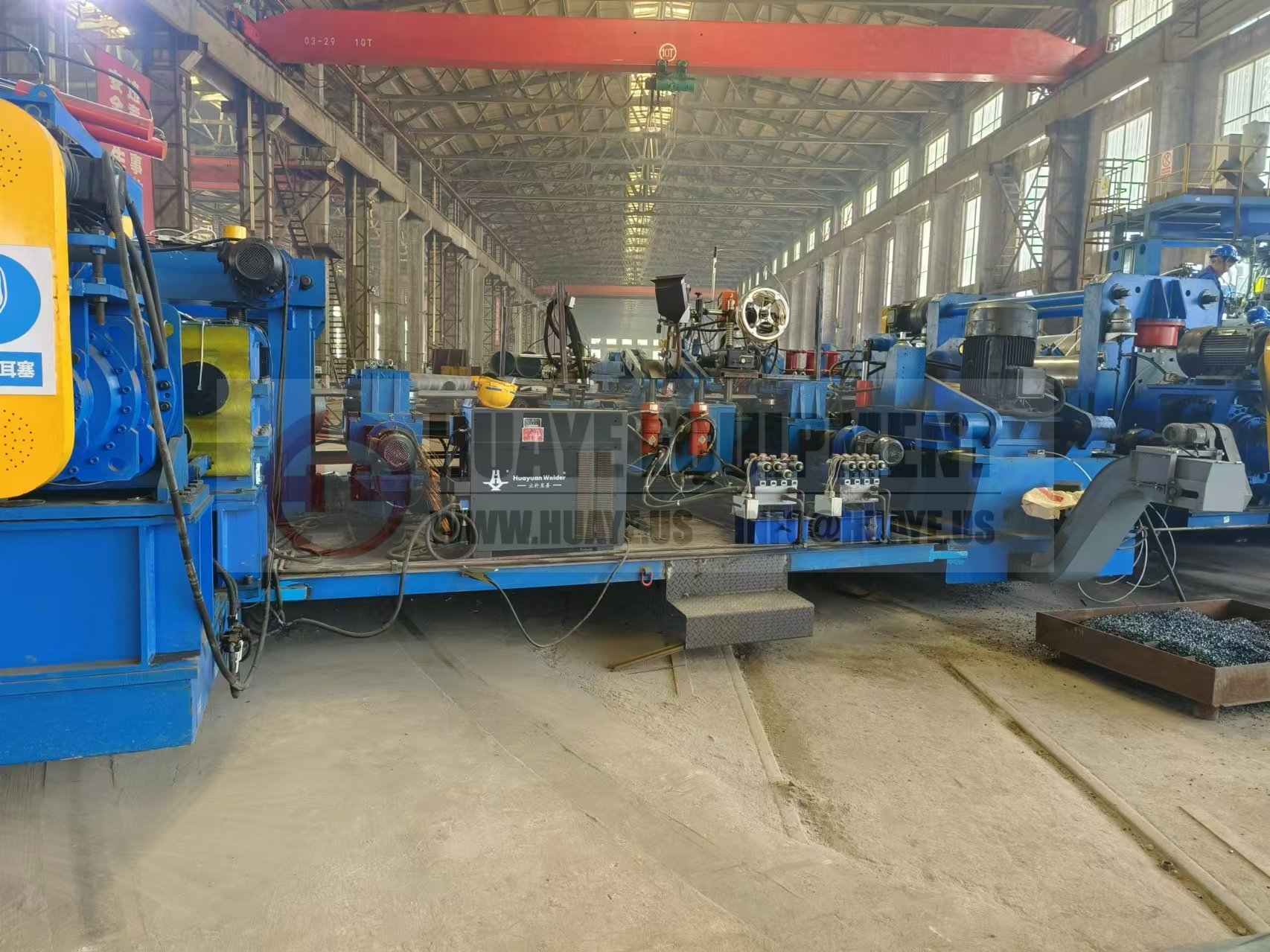
An industrial pipe production line typically consists of equipment for steel strip uncoiling, forming, welding, cutting, and pipe-end processing. These processes are highly interconnected; a failure at any stage can disrupt the operation of the entire production line.
Routine maintenance should focus on the drive system, motors, bearings, hydraulic units, and control systems. This includes regularly monitoring motor operating temperatures, checking for bearing wear, and inspecting the connections of drive components to promptly identify any abnormal vibrations or noise. Additionally, the condition of welding equipment and forming rolls must be monitored to prevent irregularities that could compromise the dimensional accuracy and weld quality of the steel pipes.
II. Strengthening Maintenance of Forming and Welding Systems
Forming and welding are critical stages in the steel pipe production process and are key factors influencing the quality of the finished product.
For forming equipment, it is necessary to regularly inspect the surfaces of the forming rolls, their mounting positions, and adjustment mechanisms to ensure that the steel strip is formed consistently according to the specified process. Wear on the rolls or positional deviations can lead to issues with the pipe’s roundness, diameter, or the alignment of the weld seam.
For welding systems, attention should be directed toward the welding power source, cooling units, electrical connections, and related auxiliary components. Keeping the equipment clean and inspecting the welding system in accordance with operational requirements helps reduce the risk of malfunctions and ensures consistent weld quality across the production line.

III. Prioritizing the Maintenance of Hydraulic and Electrical Control Systems
Hydraulic and electrical control systems are vital to the stable operation of an industrial pipe production line. Hydraulic units are generally used for equipment adjustment, clamping, lifting, and other auxiliary operations; their operational status directly affects the precision of the equipment's movements. Enterprises should regularly inspect the condition of hydraulic fluid, pipeline connections, seals, and filtration systems, addressing any leaks or pressure irregularities promptly. Regarding electrical control systems, it is essential to check wiring connections, sensors, control cabinets, and safety protection devices to ensure that all production units operate in a coordinated manner according to established programs.
Furthermore, maintaining standardized management of control system software and operational parameters helps to minimize human error.
IV. Establishing a Preventive Maintenance and Spare Parts Management System
Relying solely on reactive maintenance—repairing equipment only after a failure occurs—is insufficient for the demands of continuous industrial production. Enterprises should develop preventive maintenance plans based on equipment operating hours, production loads, and actual usage environments.
For instance, maintenance tasks can be categorized into daily inspections, periodic servicing, and overhauls of critical components, supported by comprehensive equipment operating records. It is also advisable to maintain an adequate inventory of frequently used spare parts—such as bearings, seals, hydraulic components, and other wear-prone mechanical parts—to prevent production delays caused by long procurement lead times.
Additionally, operators must undergo formal training to ensure they are fully familiar with procedures for equipment startup, operation, shutdown, and the handling of abnormal conditions.

V. Selecting Reliable Production Line Equipment for Long-Term Operation
Beyond ongoing maintenance, the initial design and manufacturing quality of an industrial pipe production line are critical to its long-term operational stability. A production line characterized by a sound structural design, high machining precision, and a reliable control system is better equipped to handle the production of steel pipes with varying specifications, while also reducing the burden of long-term maintenance.
For enterprises planning to build or upgrade steel pipe production facilities, it is recommended to carefully evaluate equipment manufacturers based on their design capabilities, production experience, the quality of core components, and the availability of after-sales technical support. Furthermore, the selection of an appropriate equipment solution should be tailored to specific requirements, including steel pipe diameter, wall thickness, production processes, and target production capacity.
Key words:
All
- All
- Product Management
- News
- Introduction
- Enterprise outlets
- FAQ
- Enterprise Video
- Enterprise Atlas
Related News
What Factors Should Be Considered in the Customized Design of a Large Pipe Machine?
Explore key factors in Large Pipe Machine customization, including pipe specifications, production processes, automation, auxiliary equipment, and manufacturer capabilities.
2026-11-19
What Key Parameters Should You Consider When Purchasing a Large Welded Pipe Production Line?
Learn the key parameters for choosing a Large Welded Pipe Production Line, including pipe specifications, welding quality, automation, auxiliary equipment, and manufacturer capabilities.
2026-11-19

How Can Large Pipe Production Equipment Meet the Demands of Thick-Walled Steel Pipe Manufacturing?
Discover how Large Pipe Production Equipment supports thick-wall steel pipe manufacturing through precise forming, reliable welding, and efficient production.
2026-11-18


Service E-mail
Hotline:
Address
Taiyuan City, Shanxi Province
To inquire about our products, please leave your email to us and we will contact you within 24 hours.