





How Can Large Pipe Production Equipment Meet the Demands of Thick-Walled Steel Pipe Manufacturing?
18 Nov,2026
Huaye
Discover how Large Pipe Production Equipment supports thick-wall steel pipe manufacturing through precise forming, reliable welding, and efficient production.
With the development of oil and gas transmission, energy projects, industrial piping, and large-scale infrastructure, thick-walled steel pipes are increasingly being used in high-pressure, high-load, and complex operating environments. Compared to standard steel pipes, thick-walled pipes impose more rigorous requirements regarding forming precision, weld quality, equipment load-bearing capacity, and production stability. Consequently, selecting the appropriate large-pipe production equipment is essential for steel pipe manufacturers to enhance both product quality and production efficiency.
I. Enhancing Equipment Structural Strength and Load-Bearing Capacity
Thick-walled steel pipes involve substantial material thickness, requiring production equipment to provide greater forming pressure and robust mechanical support. If the equipment frame lacks sufficient rigidity, it may deform during continuous processing, compromising the dimensional accuracy of the steel pipes.
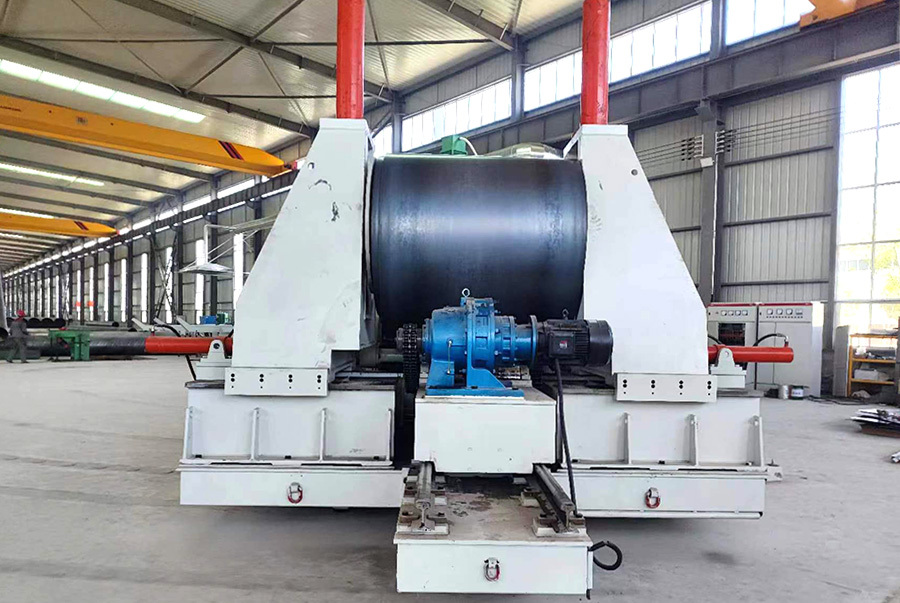
Therefore, large-pipe production equipment should feature well-designed frame structures and reliable transmission systems to ensure stable operation under heavy processing loads. Furthermore, forming rollers, support mechanisms, and other mechanical components must possess adequate strength to accommodate the processing of steel strips with varying thicknesses.

II. Optimizing the Steel Strip Forming Process
The forming process for thick-walled steel pipes demands high levels of adjustability from the equipment. Because the increased thickness of the steel strip requires greater force for bending and shaping, an improper forming process can easily lead to issues such as deviations in pipe roundness or edge misalignment.
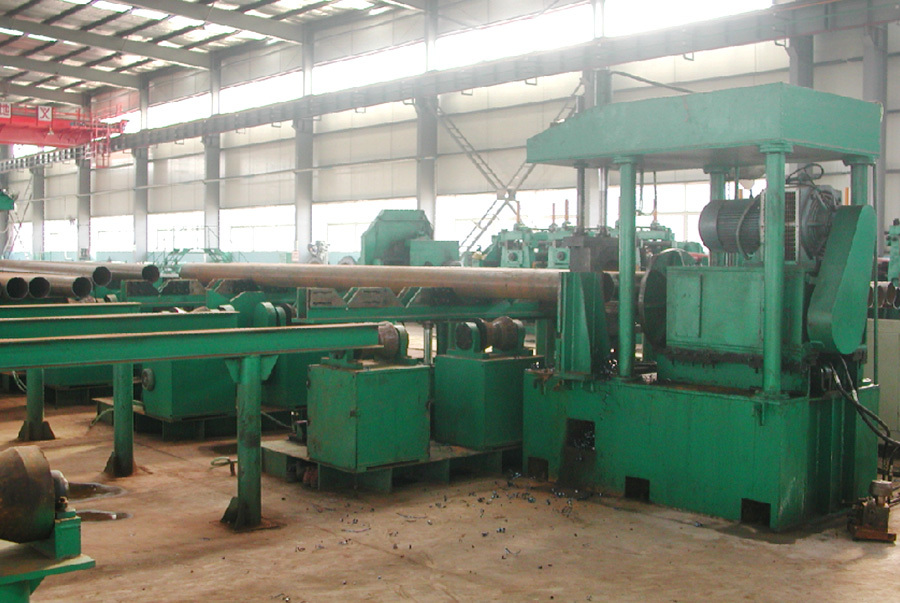
Large-pipe production equipment must be configured appropriately based on the width and thickness of the steel strip, as well as the target diameter of the finished pipe. By precisely adjusting the positioning of forming rollers, forming angles, and processing parameters, the steel strip can be gradually shaped into a pipe structure that meets the required specifications.
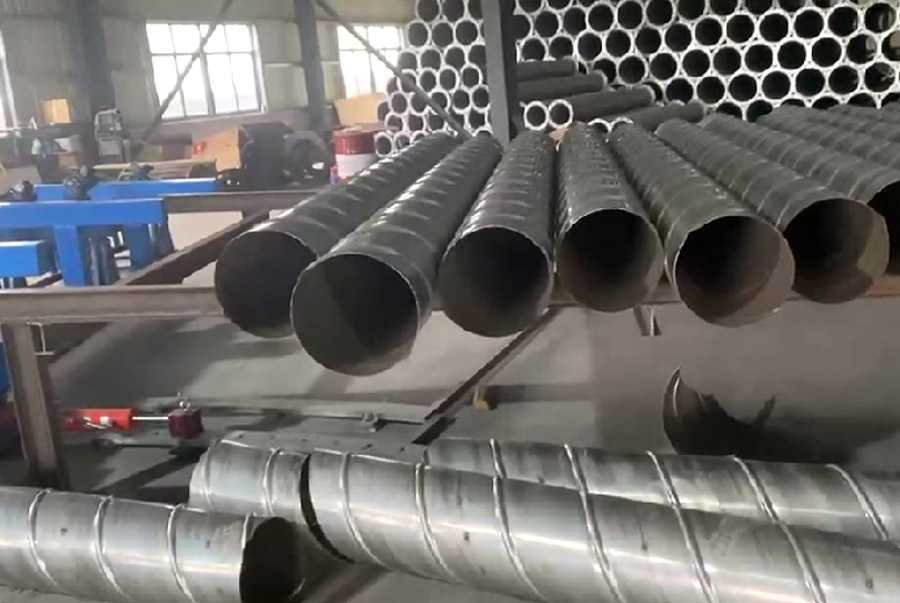
For large-diameter spiral-welded pipe production lines, it is also crucial to ensure the coordination between steel strip conveyance, forming angles, and continuous processing to maintain a stable production flow.
III. Ensuring Quality in the Welding System
Welding quality is a critical aspect of thick-walled steel pipe production. As the wall thickness of the pipe increases, the welding process places higher demands on heat input, welding speed, weld bead formation, and overall equipment stability. Therefore, large-pipe production equipment should be configured with a suitable welding system tailored to the specific steel grade and wall thickness, ensuring the coordinated operation of the welding power source, welding apparatus, and auxiliary systems.
Furthermore, the production process must prioritize weld quality inspection to promptly identify any welding defects, ensuring that the finished products meet the required quality standards.

IV. Rational Configuration of Auxiliary Processing Equipment
The production of thick-walled steel pipes involves more than just forming and welding; it also requires supporting equipment for cutting, pipe-end processing, and quality inspection.
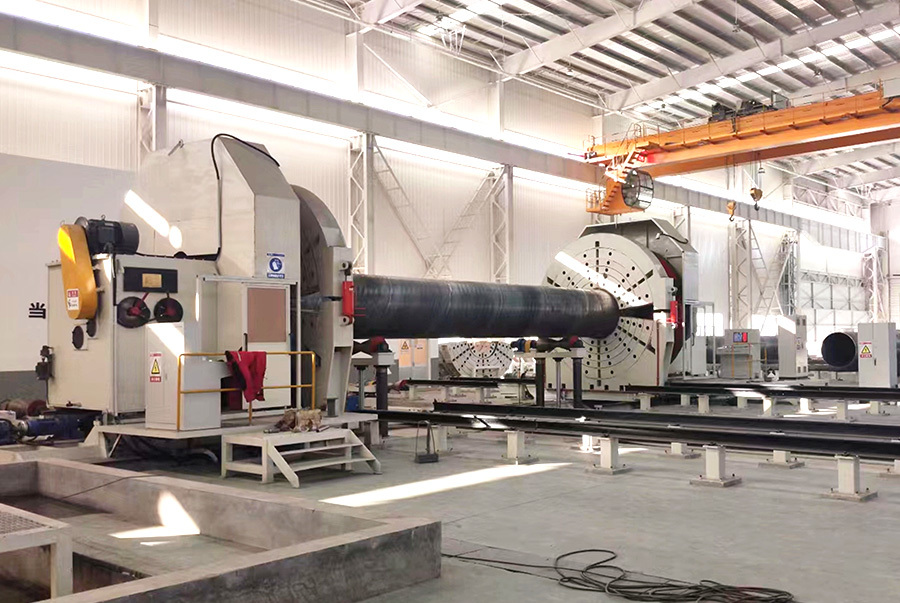
For instance, pipe-end beveling equipment can process the ends of steel pipes to meet the requirements for subsequent welding and pipeline installation, while also improving the dimensional consistency of the pipe ends. Hydrostatic testing equipment, meanwhile, is used to verify the pressure-bearing capacity of the steel pipes. For large-scale steel pipe production projects, the rational configuration of such auxiliary equipment helps establish a more comprehensive production workflow.
When planning large-pipe production equipment, enterprises should holistically evaluate the processing capacity of each stage to prevent a bottleneck in any single piece of equipment from compromising the efficiency of the entire production line.

V. Selecting Appropriate Equipment Solutions Based on Steel Pipe Specifications
Since projects involving thick-walled steel pipes vary in terms of diameter, wall thickness, material type, and production standards, equipment selection should not focus solely on maximum processing specifications; it must also account for the actual production range and target output.
Before making a purchase, enterprises should clearly define the required diameter range, wall-thickness specifications, production processes, and expected output. It is also essential to carefully evaluate potential equipment manufacturers based on their design capabilities, machining proficiency, and project experience.
Key words:
All
- All
- Product Management
- News
- Introduction
- Enterprise outlets
- FAQ
- Enterprise Video
- Enterprise Atlas
Related News
How Can Large Pipe Production Equipment Meet the Demands of Thick-Walled Steel Pipe Manufacturing?
Discover how Large Pipe Production Equipment supports thick-wall steel pipe manufacturing through precise forming, reliable welding, and efficient production.
2026-11-18

Learn how to maintain an Industrial Pipe Production Line, reduce downtime, improve equipment reliability, and ensure long-term production stability.
2026-11-18

What Configuration Factors Affect the Efficiency of a Large Pipe Production Line?
Explore how Large Pipe Production Line configuration, automation, welding processes, and equipment maintenance affect steel pipe manufacturing efficiency.
2026-11-16


Service E-mail
Hotline:
Address
Taiyuan City, Shanxi Province
To inquire about our products, please leave your email to us and we will contact you within 24 hours.