





What Are the Main Factors Affecting the Production Efficiency of large spiral pipe machine?
23 Oct,2026
Huaye
Discover the key factors affecting large spiral pipe machine efficiency, from raw material quality and equipment performance to process optimization, welding quality, and maintenance.
In spiral welded pipe manufacturing, production efficiency affects not only order delivery capabilities but also equipment utilization, production costs, and product quality. For steel pipe manufacturers using a large spiral pipe machine, production efficiency is influenced by several factors, including raw material quality, equipment operating conditions, production processes, welding quality, and daily management. Problems in any of these areas may lead to equipment downtime, reduced production speeds, or product rework. Therefore, manufacturers need to analyze the key factors affecting the entire production process and implement appropriate improvement measures.

Raw Material Quality and Supply Stability
Raw materials are the foundation of spiral welded pipe production, and their quality and availability directly affect the operating efficiency of a large spiral pipe machine. The steel strips used in production must meet the required specifications for width, thickness, material grade, and surface quality. If the steel strips have dimensional deviations, edge defects, or surface damage, additional edge preparation and forming adjustments may be required, delaying subsequent production stages.
Inconsistent steel strip quality may also cause uneven forces during forming, resulting in dimensional deviations or poor edge alignment. These problems can reduce production speeds and increase the risk of welding defects and rework.
To improve production efficiency, manufacturers should conduct necessary quality inspections when raw materials arrive and verify that the steel strip specifications match the production orders. They should also arrange purchasing and inventory management properly to prevent equipment waiting time caused by material shortages. Establishing a stable supply management system helps reduce unplanned production interruptions and supports continuous operation.
Equipment Performance and Operating Stability
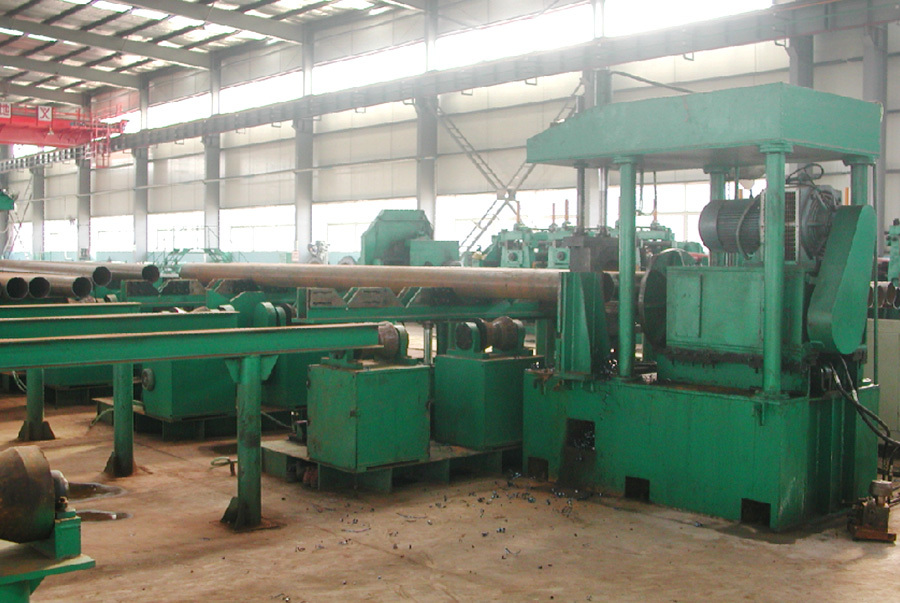
The performance of a large spiral pipe machine is one of the key factors determining production efficiency. The forming capacity, welding system, transmission structure, cutting equipment, and level of automation all influence the number of steel pipes produced within a given period.
If mechanical failures, positioning deviations, or transmission problems occur frequently, the production line may need to stop for inspection and repairs. In addition, worn forming rolls and guide components can affect the stability of steel strip forming and increase adjustment time.
Manufacturers should select equipment configurations according to their actual production requirements and regularly inspect critical components. For parts subject to wear, appropriate maintenance schedules should be established to address loose connections, misalignment, and abnormal vibration promptly. Maintaining equipment operating records and tracking downtime, repair duration, and failure causes can help identify the main problems affecting production efficiency.
The level of automation is also worth considering. An appropriate automatic control system can help operators maintain stable production parameters, reduce repeated adjustments, and minimize human operating errors, thereby improving the continuous operation of the production line.
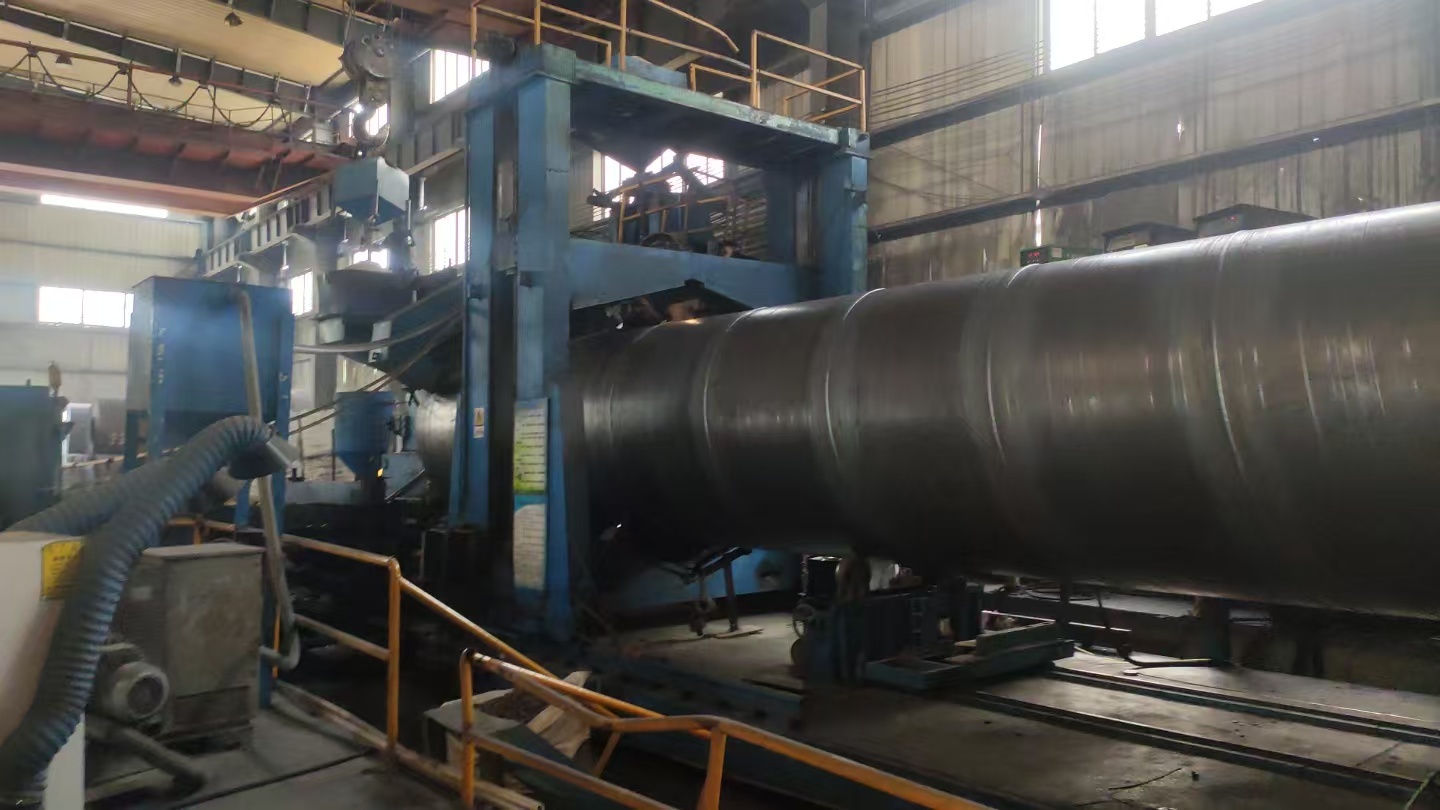
Production Processes and Parameter Settings
Proper production processes are essential for maximizing the performance of a large spiral pipe machine. Spiral welded pipe manufacturing involves several stages, including steel strip uncoiling, forming, edge alignment, welding, and cut-to-length operations. These stages must work together efficiently. If the parameters of any process are set incorrectly, the operating rhythm of the entire production line may be affected.
For example, forming parameters that do not match the steel strip specifications may result in poor pipe roundness, edge misalignment, or dimensional deviations. Similarly, if the production speed is not coordinated with the welding process, weld quality may deteriorate, leading to additional inspections and rework.
Manufacturers should establish appropriate process parameters based on steel strip thickness, target pipe diameter, material grade, and product quality requirements. When changing pipe specifications or adjusting production orders, equipment settings and necessary trial runs should be completed in advance to reduce repeated adjustments during regular production.
In addition, clear coordination between production stages is essential. If an upstream process operates faster than the downstream process can handle, waiting time and production bottlenecks may occur. Optimizing the coordination between processes helps reduce delays and improve the operating efficiency of the entire production line.
Welding Quality and Product Qualification Rate
Welding quality affects not only the performance of spiral welded pipes but also the overall production efficiency of a large spiral pipe machine. Unstable welding parameters, inaccurate steel strip edge alignment, or unsuitable raw material conditions may cause weld defects, increasing the risk of repairs or product rejection.
Rework consumes additional equipment capacity, labor, and production time. If the same defects occur repeatedly, they may also disrupt production schedules and reduce effective equipment utilization. Therefore, manufacturers should not focus exclusively on operating speed. The first-pass qualification rate and product quality consistency are equally important.
During production, welding speed, current, voltage, and other parameters should be controlled according to material characteristics and applicable welding procedures. Weld inspections and finished product inspections should also be conducted in accordance with relevant standards. When quality problems are detected, manufacturers should trace the affected production batches and investigate equipment conditions, process settings, and raw material quality.
By strengthening in-process quality control and reducing defective products and repeated processing, manufacturers can increase effective output while maintaining product quality. This approach also helps prevent higher overall production costs caused by attempts to increase short-term production speeds.

Frequently Asked Questions (FAQ)
1. What are the main factors affecting the production efficiency of a large spiral pipe machine?
The main factors include raw material quality, equipment performance, process parameters, welding quality, and production management. These factors are interconnected and should be evaluated through a comprehensive analysis of actual production data.
2. How can manufacturers increase the continuous operating time of a large spiral pipe machine?
Manufacturers can reduce unplanned downtime by maintaining equipment regularly, inspecting critical components in advance, keeping commonly used spare parts available, and standardizing operating procedures. Recording equipment failure causes also helps identify recurring problems and develop targeted improvement measures.
3. Does increasing production speed always improve production efficiency?
Not necessarily. Increasing operating speed without adjusting forming and welding parameters accordingly may lead to more product defects and rework. A more effective approach is to optimize production speed, equipment stability, and coordination between processes while ensuring that all products meet the required quality standards.
4. How should manufacturers evaluate the actual production efficiency of a large spiral pipe machine?
Manufacturers can evaluate production efficiency by tracking qualified pipe output per unit of time, effective equipment operating time, downtime, first-pass qualification rate, and rework rate. Comparing these indicators across different production batches helps identify bottlenecks and develop targeted improvement plans.
Key words:
All
- All
- Product Management
- News
- Introduction
- Enterprise outlets
- FAQ
- Enterprise Video
- Enterprise Atlas
Related News
What Are the Main Factors Affecting the Production Efficiency of large spiral pipe machine?
Discover the key factors affecting large spiral pipe machine efficiency, from raw material quality and equipment performance to process optimization, welding quality, and maintenance.
2026-10-23

How to Reduce Material Waste During the Production Process of large diameter welded pipe machine
Learn how a large diameter welded pipe machine helps reduce material waste through optimized raw material management, forming parameters, welding, cutting, and production monitoring.
2026-10-23
How 1020mm spiral welded pipe production line Reduces Material Waste During Production
Learn how a 1020mm spiral welded pipe production line reduces material waste through optimized forming, welding, cutting, and quality control.
2026-10-22


Service E-mail
Hotline:
Address
Taiyuan City, Shanxi Province
To inquire about our products, please leave your email to us and we will contact you within 24 hours.