





How to Reduce Material Waste During the Production Process of large diameter welded pipe machine
23 Oct,2026
Huaye
Learn how a large diameter welded pipe machine helps reduce material waste through optimized raw material management, forming parameters, welding, cutting, and production monitoring.
In large-diameter welded pipe manufacturing, raw material utilization directly affects production costs, product quality, and overall efficiency. For steel pipe manufacturers using a large diameter welded pipe machine, material waste can occur during steel strip uncoiling, edge preparation, forming, welding, and cut-to-length operations. Without proper process control and equipment maintenance, even small amounts of waste can accumulate over time and increase production costs. Therefore, manufacturers need to optimize equipment settings, production processes, raw material management, and quality control to reduce unnecessary material waste.
Optimize Raw Material Management to Reduce Waste at the Source
Consistent raw material quality and dimensions are essential for reducing material waste. In large-diameter welded pipe production, steel strip width, thickness, edge condition, and surface quality can all affect subsequent processing. If raw materials have dimensional deviations, edge defects, or localized damage, additional trimming may be required, or the finished pipes may fail to meet quality requirements.
When raw materials arrive, manufacturers should inspect their specifications, thickness, surface condition, and relevant quality certificates. Materials should also be stored and categorized according to production orders. Before production begins, the steel strip specifications must be checked against the target pipe dimensions to prevent repeated processing or material rejection caused by improper material selection.
In addition, proper inventory management and production scheduling can reduce waste caused by prolonged storage, improper handling, or the mixing of materials with different specifications. By maintaining batch records, manufacturers can track the use of different material batches and obtain useful information for quality analysis and future purchasing decisions.
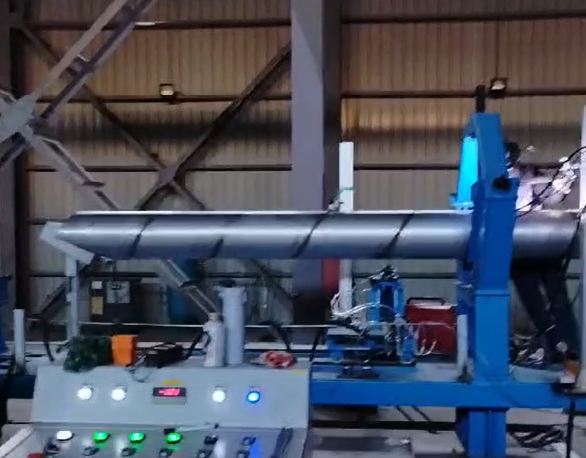
Optimize Equipment Parameters to Improve Material Utilization During Forming
The operating condition and parameter settings of a large diameter welded pipe machine directly affect the forming quality of steel strips. If equipment parameters do not match the material specifications, problems such as forming deviations, edge misalignment, or unstable pipe dimensions may occur, increasing the likelihood of rework and rejected products.
Before production, operators should adjust the forming roll positions, reduction settings, and other relevant parameters according to the steel strip thickness, width, and target pipe diameter. Before starting mass production, a trial run can be conducted to check pipe roundness, dimensional accuracy, and edge alignment. Continuous production should begin only after the results meet the required standards.
For large-diameter welded pipe equipment, forming stability is particularly important. Worn components, loose connections, or positioning deviations may cause uneven forces on the steel strip and affect subsequent welding quality. Therefore, manufacturers should regularly inspect forming rolls, guide devices, and transmission components and address any abnormalities promptly.
By optimizing equipment parameters and maintaining stable operating conditions, manufacturers can reduce material waste caused by poor forming quality and improve steel strip utilization.

Control Welding and Cutting Processes to Reduce Product Rejection
Welding and cutting are critical stages in large-diameter welded pipe production. Unstable welding quality may cause weld defects that require repair, while inaccurate cutting lengths can generate excessive end scrap or prevent finished pipes from meeting delivery requirements.
During welding, manufacturers should set appropriate welding speed, current, voltage, and other parameters according to the steel grade, material thickness, and applicable welding procedures. They should also maintain stable welding conditions and monitor the alignment of the steel strip edges to reduce the risk of weld defects caused by misalignment or improper gaps.
For cut-to-length operations, production teams should verify order requirements, pipe lengths, and cutting equipment settings in advance. Unnecessary cutting allowances should be minimized. For continuous production tasks, cutting plans can be optimized according to actual process conditions to reduce waste from pipe ends and dimensional deviations.
It is important to remember that material waste reduction should never come at the expense of product quality. Manufacturers should adjust production processes based on weld inspections, dimensional checks, and finished product testing to maintain a reasonable balance between material utilization and product quality.
Strengthen Production Monitoring to Identify Material Waste Promptly
Relying solely on operator experience makes it difficult to control material waste consistently over time. Manufacturers can establish a production data recording system to track the input weight of steel strips, the output weight of qualified pipes, cutting scrap, the number of repaired products, and the quantity of rejected products for each batch. These records help identify the production stages where material waste is most significant.
For example, if cutting scrap increases significantly for a particular pipe specification, manufacturers should review cutting length settings, cutting accuracy, and production scheduling. If the weld repair rate continues to rise, they should investigate forming parameters, welding conditions, and raw material quality.
Daily operating records for a large diameter welded pipe machine should also include equipment downtime, parameter adjustments, component maintenance, and corrective actions. By comparing data from different production batches, manufacturers can identify recurring problems and prevent the same causes of material waste from occurring repeatedly.
Operator training is equally important. Standardized operating procedures, clear quality inspection criteria, and timely reporting of abnormalities can reduce material waste caused by incorrect operation, improper parameter settings, or delayed problem detection.

Frequently Asked Questions (FAQ)
1. Which production stages are most likely to generate material waste when using a large diameter welded pipe machine?
The main stages include raw material uncoiling and edge preparation, pipe forming, welding, cut-to-length operations, and the reworking of defective products. The main sources of waste may vary between manufacturers. Production data should be analyzed to identify the areas that require the most attention.
2. How can manufacturers determine whether material waste is within a reasonable range?
Manufacturers can establish internal material waste targets based on pipe specifications, steel grades, production processes, and applicable quality standards. Actual results should be compared across different production batches. If material waste increases unexpectedly, equipment conditions, process parameters, and raw material quality should be investigated rather than relying on a single universal waste percentage.
3. Why can equipment maintenance help reduce material waste?
Worn forming rolls, misaligned guide devices, or inaccurate cutting components can cause dimensional deviations and processing defects. Regular maintenance helps maintain equipment accuracy, reducing rework, rejected products, and unnecessary cutting waste.
4. Is replacing a large diameter welded pipe machine necessary to reduce material waste?
Not necessarily. Manufacturers can first inspect the existing equipment, review process parameters, and improve operating procedures. Adjusting settings, strengthening maintenance practices, and optimizing production scheduling may improve material utilization. Equipment upgrades or replacement should be considered if the existing machine consistently fails to meet production capacity, dimensional accuracy, or product specification requirements.
Key words:
All
- All
- Product Management
- News
- Introduction
- Enterprise outlets
- FAQ
- Enterprise Video
- Enterprise Atlas
Related News
What Are the Main Factors Affecting the Production Efficiency of large spiral pipe machine?
Discover the key factors affecting large spiral pipe machine efficiency, from raw material quality and equipment performance to process optimization, welding quality, and maintenance.
2026-10-23
How to Reduce Material Waste During the Production Process of large diameter welded pipe machine
Learn how a large diameter welded pipe machine helps reduce material waste through optimized raw material management, forming parameters, welding, cutting, and production monitoring.
2026-10-23
How 1020mm spiral welded pipe production line Reduces Material Waste During Production
Learn how a 1020mm spiral welded pipe production line reduces material waste through optimized forming, welding, cutting, and quality control.
2026-10-22


Service E-mail
Hotline:
Address
Taiyuan City, Shanxi Province
To inquire about our products, please leave your email to us and we will contact you within 24 hours.