




How to choose the right pipe forming machine for your production line
14 Oct,2026
Huaye
Understand the key factors for selecting a pipe forming machine—including order requirements, material compatibility, production line integration, quality control, and equipment maintenance—to help enterprises optimize pipe production processes and enhance both production efficiency and product consistency.
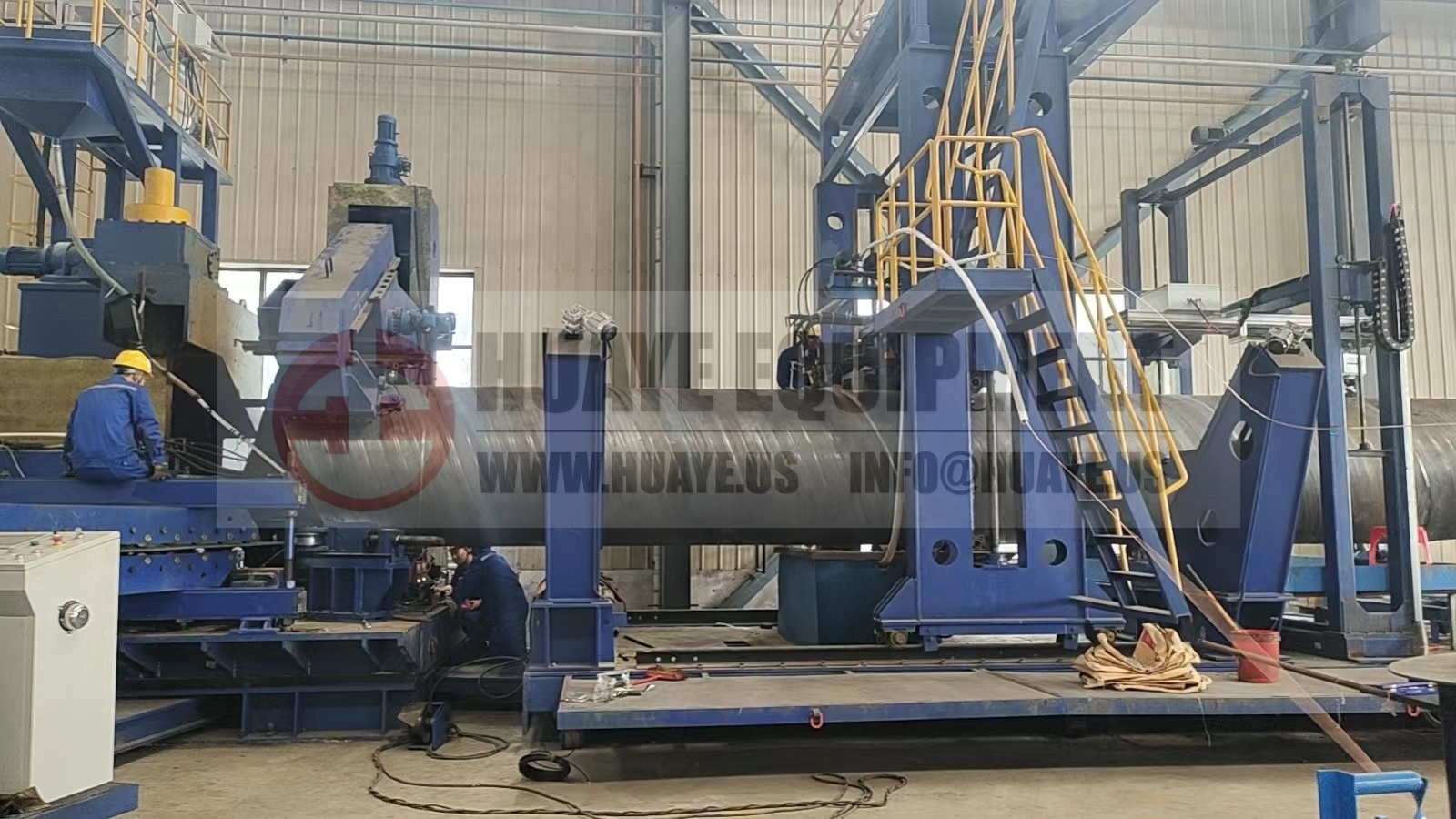
In the pipe manufacturing industry, the equipment configuration of a production line directly impacts product delivery capabilities, processing consistency, and production management efficiency. When selecting a pipe forming machine, enterprises must consider not only the machine's ability to perform basic forming tasks but also its compatibility with existing workflows, fluctuating order demands, and quality management requirements. Since factories differ significantly in terms of raw material supply, product mix, staffing, and production pacing, a sound selection strategy must be grounded in an analysis of actual operating conditions. The following sections outline key considerations for selecting a pipe forming machine, covering workflow planning, equipment compatibility, quality control, and long-term operations.
Planning Processing Capabilities Based on Order Characteristics
Equipment selection should not begin with a specific technical parameter; instead, it should start with an analysis of the enterprise's order structure. A factory that produces pipes of fixed specifications year-round has different equipment requirements than one that handles small-batch orders involving a wide range of sizes.
If the product line consists primarily of standardized pipes, equipment can be configured around common specifications, with a focus on maximizing continuous processing stability and production throughput. Conversely, if customer demands fluctuate frequently, priority should be given to the machine's ability to switch specifications, the ease of adjustment, and compatibility across different products.
Beyond dimensions, the intended application of the pipe must be clearly defined. For instance, water transmission pipes must meet specific dimensional and usage standards; oil and gas transmission pipes require a focus on material properties, weld quality, and relevant inspection standards; and construction piles or structural pipes require cross-sectional dimensions and mechanical properties determined by their specific design functions.
Enterprises should also categorize their anticipated order types, distinguishing between standard and specialized products. Establishing a clear list of product specifications helps equipment suppliers formulate more accurate technical proposals, preventing suboptimal equipment configurations caused by vague requirements.

Comparing Forming Methods and Assessing Equipment-Material Compatibility
Pipe forming machines vary in terms of processing principles, forming structures, and application ranges. During procurement, it is essential to verify that the machine's forming method meets the manufacturing requirements of the target product before evaluating its mechanical structure and operational performance. For continuous metal strip forming lines, metal materials typically undergo processes such as feeding, progressive bending, and forming to create a predetermined tubular cross-section. Such equipment requires a well-designed sequence of forming passes and stable material guidance capabilities to minimize the risks of edge misalignment, cross-sectional deformation, and surface scratching.
Material adaptability is another crucial factor. Different metals vary in strength, ductility, and spring-back characteristics; consequently, processing the same tube specifications may require different forming parameters. Before purchasing, it is advisable to provide actual material samples or complete material specifications and to verify that the equipment is suitable for the intended materials and thickness ranges.
Additionally, enterprises should understand the specific methods for equipment adjustment, including roller positioning, tooling changes, and parameter settings. Equipment featuring clear adjustment procedures and user-friendly operation adapts more easily to multi-product manufacturing environments and helps reduce operational errors during changeovers.
Optimizing Line-Wide Coordination Based on Production Rhythm
The operating speed of a single machine does not fully reflect the output capacity of the entire production line. True production efficiency depends on maintaining continuous, stable coordination between the various processing stages.
When planning the production line, it is essential to ensure that the capacities of the raw material loading, leveling, feeding, forming, welding, and cutting stages are well-matched. If the feeding system fails to provide a steady supply of material, or if the cutting process cannot keep pace with the forming speed, issues such as idle waiting, downtime, or an inconsistent production rhythm may arise.
Enterprises must also arrange the equipment layout logically based on factory conditions. Factors such as the path for raw material entry, the finished product discharge area, the placement of lifting equipment, and access aisles for personnel inspections should all be incorporated into the overall plan. A rational layout minimizes material handling distances and reduces cross-interference during production.
For factories planning to expand capacity incrementally, it is wise to evaluate equipment interfaces, control system compatibility, and space provisions for auxiliary facilities in advance. This approach not only meets current order demands but also paves the way for future additions—such as inspection equipment, automated process optimizations, or adjustments to production organization.

Establishing Dual Safeguards: Quality Control and Equipment Maintenance
The quality of formed pipe depends not only on equipment design but also on parameter management during production, equipment condition, and inspection protocols. Therefore, when selecting equipment, one should evaluate both its quality control capabilities and the ease of future maintenance.
Regarding production quality, attention must be paid to metrics such as outer diameter, cross-sectional dimensions, roundness, straightness, and surface condition. For welded pipes, weld seam quality must also be inspected and tested in accordance with the product's intended use and applicable standards. During procurement, suppliers should be asked to detail their methods for precision control, monitoring of key parameters, and acceptance testing.
Regarding equipment maintenance, it is essential to understand the inspection requirements for forming rolls, bearings, drive systems, and electrical control components. Factors such as the accessibility of key components for servicing, the ease of replacing wear parts, and the availability of fault diagnostic functions will all impact the efficiency of daily maintenance.
Simultaneously, enterprises should establish standardized operating and maintenance procedures, keeping records of equipment operating status, anomalies, maintenance schedules, and product quality data. Analyzing these records allows for the early detection of equipment wear or deviations in process parameters, thereby minimizing the impact of unexpected downtime on delivery schedules.
Frequently Asked Questions (FAQ)
Q1: Should the pipe forming machine be selected based on the final product's intended use?
Yes. Pipes intended for different applications may vary in terms of dimensions, tolerances, material properties, and inspection requirements. Clearly defining the end-use scenario is necessary to determine the equipment's processing range and the required auxiliary functions.
Q2: What should be the priority for multi-specification production lines?
It is recommended to focus on the range of specifications covered, the method for changing rolls or molds, the ease of parameter adjustment, and the setup time required to switch between products. Additionally, one should verify whether forming quality remains stable across different specifications.
Q3: Is a higher rated production speed always better?
Not necessarily. Rated speed is just one metric for evaluating equipment; actual output is also influenced by raw material supply, forming stability, welding or cutting cycle times, downtime, and product yield rates. When purchasing, the focus should be on overall performance under actual production conditions.
Q4: How can quality fluctuations during the pipe forming process be minimized?
Measures should focus on raw material consistency, forming parameter settings, roller condition, equipment calibration, and in-process inspection. Establishing standardized operating procedures and regularly checking critical dimensions helps detect deviations in a timely manner.
Q5: What key aspects should be inspected during equipment acceptance?
Acceptance should be conducted based on the pre-agreed technical specifications, focusing on processing ranges, product dimensional accuracy, surface quality, operational stability, and relevant safety features. For welded pipes, weld quality must also be verified in accordance with applicable standards.
Selecting the right pipe forming machine hinges on aligning the equipment solution with the order mix, material characteristics, and production workflow. Only by thoroughly analyzing processing requirements prior to procurement—and integrating production efficiency, quality management, maintenance capabilities, and future scalability into the overall plan—can a company establish a stable, flexible pipe production line suitable for long-term operation.
Key words:
All
- All
- Product Management
- News
- Introduction
- Enterprise outlets
- FAQ
- Enterprise Video
- Enterprise Atlas
Related News

What Are the Key Criteria for Choosing a 1420mm Spiral Pipe Mill Manufacturer?
Learn how to choose a 1420mm Spiral Pipe Mill manufacturer by evaluating equipment quality, technical expertise, production capacity, and after-sales support.
2026-11-11

Discover how an Industrial Steel Pipe Mill improves dimensional accuracy, welding quality, automation, and production efficiency through precise process control.
2026-11-11
Automation Development Trends and Application Value of Heavy Duty Steel Pipe Manufacturing Equipment
Explore the automation trends and applications of heavy duty steel pipe manufacturing equipment, from welding and pipe-end processing to intelligent production control.
2026-11-10


Service E-mail
Hotline:
Address
Taiyuan City, Shanxi Province
To inquire about our products, please leave your email to us and we will contact you within 24 hours.