



How to Determine If a Steel Pipe Forming Machine Is Suitable for Your Existing Production Line
15 Oct,2026
Huaye
Assessing the suitability of a steel pipe forming machine for an existing production line—covering raw material compatibility, forming capabilities, process compatibility, product quality, and equipment maintenance—helps steel pipe manufacturers optimize equipment selection and production efficiency.
For steel pipe manufacturers, introducing a new steel pipe forming machine is more than just adding a piece of production equipment; it requires careful consideration of the existing production line’s processes, raw material specifications, capacity requirements, and downstream processing stages. Selecting the wrong equipment can lead to an uncoordinated production rhythm, inconsistent forming quality, or even the need for major modifications to the existing production line. Therefore, before purchasing or upgrading equipment, companies should conduct a comprehensive assessment based on their actual production conditions to determine whether the new equipment can be effectively integrated into their current manufacturing system.
Define Product Requirements for the Existing Production Line
To determine whether a steel pipe forming machine is suitable, you must first understand the types of steel pipes currently being produced, as well as any plans for future product expansion.
Different steel pipe products vary in terms of diameter, wall thickness, length, and cross-sectional shape. For instance, steel pipes used for water pipelines typically require high dimensional consistency, superior weld quality, and strong pressure resistance; meanwhile, pipes intended for structural applications in construction may require high dimensional precision, straightness, and structural strength.
Before evaluating equipment, companies should compile the key specifications of their current product range—including minimum and maximum pipe diameters, wall thickness ranges, standard raw material widths, and relevant quality standards. If there are plans to introduce large-diameter pipes or other specialized structural pipes in the future, these requirements should also be factored into the assessment.
Only by clearly defining current products and future production goals can you determine whether a machine’s forming range aligns with your actual needs—ensuring that the equipment can handle not just some of your products, but all of your standard orders.
Verify Compatibility Between Equipment and Raw Material Specifications
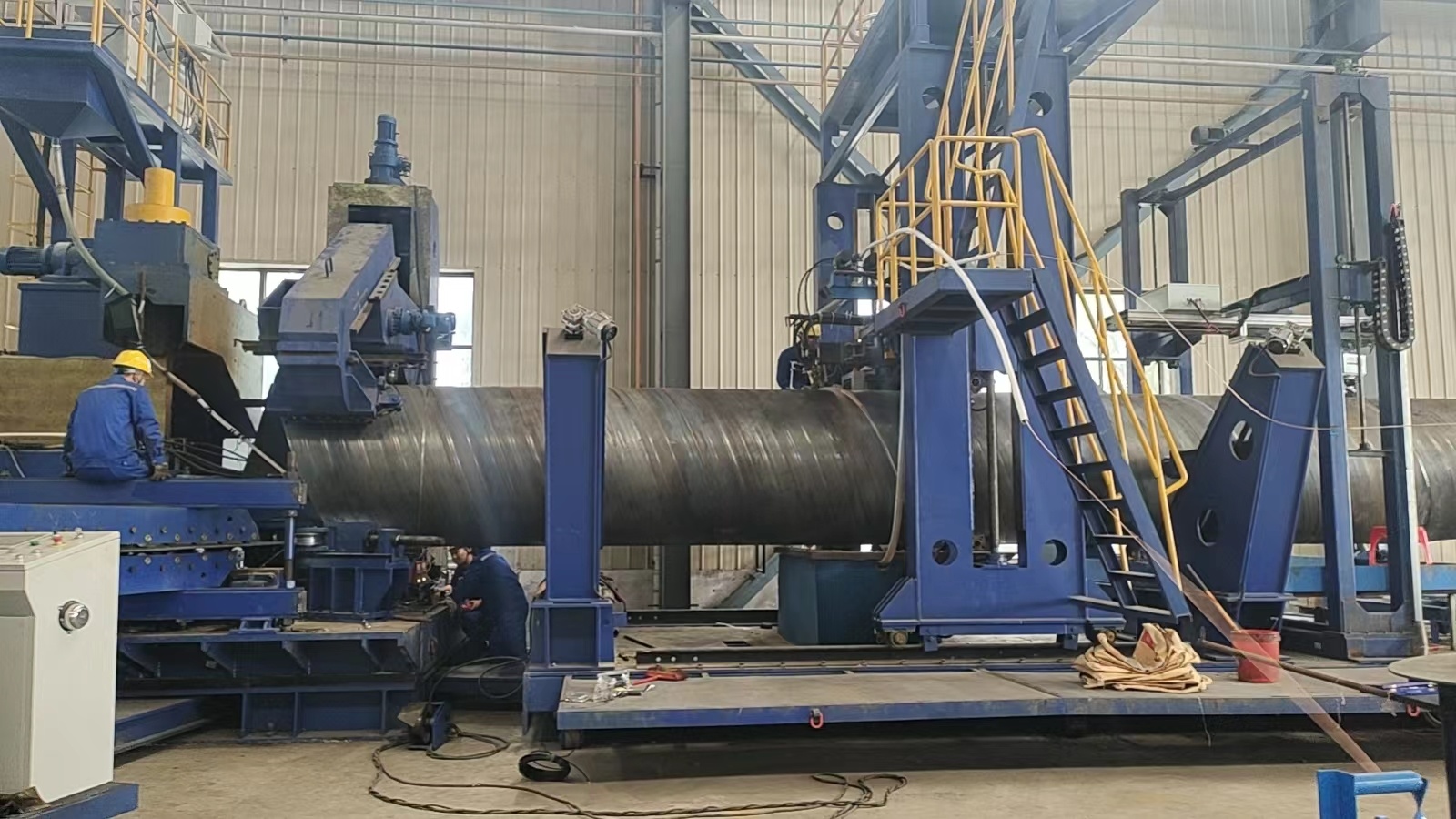
Raw materials are a critical factor influencing the quality of steel pipe forming. Since a steel pipe forming machine must be designed and adjusted according to the specifications of the steel strip or other raw materials used, the equipment parameters must strictly align with the materials actually employed by the company.
During the evaluation, it is essential to verify the thickness, width, material grade, and mechanical properties of the raw materials. Steel of varying strengths and thicknesses may exhibit different deformation characteristics during the bending and forming process. If the equipment lacks sufficient forming capacity, it may result in issues such as uneven forming, edge deformation, or dimensional deviations. In addition, it is essential to examine the equipment’s roller configuration, adjustment range, and forming station layout to ensure compatibility with the raw material specifications commonly used by the enterprise. If the production process frequently involves changes in material thickness or steel grade, it is necessary to further evaluate the equipment’s adjustment mechanisms and the ease of changeover.
By comparing material parameters against the equipment’s technical requirements, potential compatibility issues can be identified in advance, providing a basis for subsequent trial production.
Evaluating Forming Capability and Production Efficiency
Whether a piece of equipment can meet production requirements depends not only on its theoretical operating speed but also on its forming stability, changeover time, and the processing capacity of downstream operations.
Enterprises should assess the actual production capacity of a steel pipe forming machine based on daily order volumes, shift schedules, and target output. The maximum operating speed specified for a machine does not necessarily equate to the effective output under stable production conditions; therefore, it is important to understand its performance across various pipe diameters, wall thicknesses, and material types.
For spiral-welded pipe production or other continuous forming lines, one must also consider the synchronization of speeds across the forming, welding, cutting, and conveying stages. If the forming equipment operates at a high speed that cannot be matched by the welding or cutting processes, a production bottleneck may arise, negatively impacting the efficiency of the entire line.
Furthermore, enterprises should pay close attention to downtime during product changeovers. For facilities that handle a high volume of diverse, small-batch orders, the efficiency of these changeovers can be just as critical as the machine’s maximum operating speed.
Confirming Compatibility with Existing Process Flows
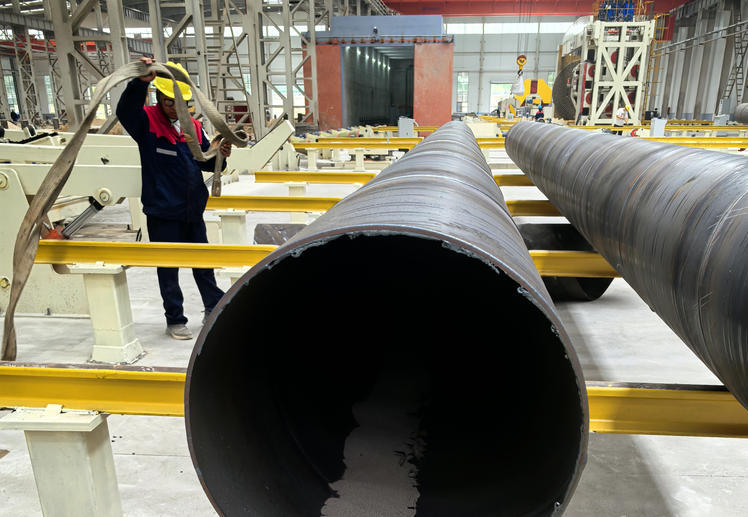
Even if a machine meets the required product specifications, it may not be immediately integrable into an existing production line. Consequently, process compatibility is a key factor in determining the suitability of a steel pipe forming machine.
During the evaluation, the existing production workflow should be reviewed—examining the connections between stages such as material feeding, forming, welding, sizing, cutting, and discharge—to ensure that the new equipment’s input/output orientation, installation footprint, conveying height, and interface requirements align with the current layout.
If the equipment is intended to operate in conjunction with existing welding systems, control systems, or automated conveying mechanisms, it is also necessary to verify the compatibility of control signals, operational timing (cycle times), and safety interlock mechanisms. When necessary, you may request that the equipment supplier provide layout drawings, foundation requirements, and interface specifications to evaluate installation conditions in advance.
Furthermore, it is essential to confirm whether the installed equipment will interfere with the workspace, material flow, or routine maintenance activities of other production processes. Addressing these issues beforehand helps minimize the need for post-installation modifications and prevents disruptions to normal production.
Evaluating Finished Product Quality and Control Precision
A steel pipe forming machine intended for an existing production line must not only be capable of producing steel pipes to the target specifications but also enable the enterprise to consistently meet established quality standards.
Key areas to assess include the equipment’s ability to control pipe diameter, roundness, straightness, and dimensional consistency during the forming process. For welded pipe production, it is also necessary to examine the fit-up (alignment) of the edges, the positioning of the weld seam, and how the operational stability of the equipment affects weld quality.
During the evaluation, do not rely solely on technical specifications; verify performance through sample testing or trial production runs. These tests should cover representative, frequently produced specifications and, where feasible, encompass a range of material thicknesses and product dimensions.
By measuring the dimensions of the finished products, inspecting their appearance and weld quality, and documenting any fluctuations during continuous production, you can more objectively determine whether the equipment meets the company’s quality standards.
For products with specific testing requirements—such as water transmission pipes, oil and gas pipelines, or structural pipes—ensure that the equipment aligns with the relevant product standards and subsequent inspection protocols.
Comprehensive Assessment of Maintenance Requirements and Long-Term Operational Stability
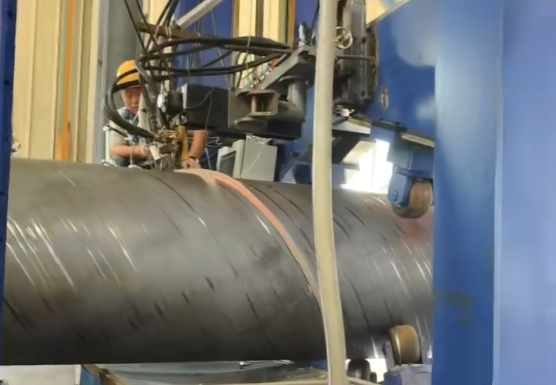
The suitability of a steel pipe forming machine is reflected not only during the initial phase of production but also throughout its long-term operation. Enterprises should proactively identify the machine’s wear-prone components, lubrication requirements, routine inspection tasks, and the procedures for replacing critical parts.
For instance, wear on forming rollers, drive components, or guiding mechanisms can compromise both the dimensional accuracy of the steel pipes and the stability of the production process. If the equipment features a complex design, lacks sufficient space for maintenance, or makes it difficult to quickly service key components, the risk of extended downtime increases.
Additionally, evaluate the electrical control system, fault diagnostic capabilities, and safety protection mechanisms. It is also important to confirm that operators can master the use of the equipment through the company’s existing training framework. When planning to integrate new equipment into an automated production line, companies should also consider the potential for future expansion and upgrades. Equipment that offers flexibility for adjustments, ease of maintenance, and clear technical documentation is generally easier to incorporate into long-term production planning.
Q&A: Common Questions Regarding the Selection of Steel Pipe Forming Machines
Q1: If an existing production line is already operating normally, why is it still necessary to evaluate the compatibility of new equipment?
Normal operation does not guarantee compatibility with all new equipment. New additions may differ in terms of dimensions, operating speed, interfaces, or control methods; conducting an assessment beforehand helps mitigate the risks of installation-related modifications and production downtime.
Q2: How can one determine whether a machine’s production capacity meets the requirements?
Evaluation should be based on a comprehensive analysis of target output, typical steel pipe specifications, material properties, and the processing capacity of downstream operations. Beyond maximum operating speed, consider factors such as performance during continuous operation, changeover time, and the actual yield of qualified products.
Q3: Is a trial run necessary before purchasing a Steel Pipe Forming Machine?
Whenever conditions permit, a trial run is highly recommended. Using representative raw materials and product specifications to verify forming quality, dimensional accuracy, weld integrity, and operational stability will help ensure the equipment meets your specific requirements.
Q4: What should be done if the new equipment is not fully compatible with the existing production line?
First, identify the specific areas of incompatibility. Then, assess the feasibility of resolving these issues—for example, by adjusting the layout, adding conveying equipment, modifying control interfaces, or optimizing process workflows. If significant modifications are required, a technical feasibility study should be completed before finalizing the equipment procurement plan.
Key words:
All
- All
- Product Management
- News
- Introduction
- Enterprise outlets
- FAQ
- Enterprise Video
- Enterprise Atlas
Related News
What Are the Key Criteria for Choosing a 1420mm Spiral Pipe Mill Manufacturer?
Learn how to choose a 1420mm Spiral Pipe Mill manufacturer by evaluating equipment quality, technical expertise, production capacity, and after-sales support.
2026-11-11
Discover how an Industrial Steel Pipe Mill improves dimensional accuracy, welding quality, automation, and production efficiency through precise process control.
2026-11-11
Automation Development Trends and Application Value of Heavy Duty Steel Pipe Manufacturing Equipment
Explore the automation trends and applications of heavy duty steel pipe manufacturing equipment, from welding and pipe-end processing to intelligent production control.
2026-11-10


Service E-mail
Hotline:
Address
Taiyuan City, Shanxi Province
To inquire about our products, please leave your email to us and we will contact you within 24 hours.