




How Spiral Welded Pipe Machines Adapt to Production Requirements for Various Steel Pipe Specifications
15 Oct,2026
Huaye
Explore methods for adapting spiral-welded pipe machines to the production of various steel pipe specifications—covering equipment selection, material matching, forming processes, welding parameter adjustments, and production line configuration—to help enterprises optimize their steel pipe manufacturing workflows.
In the steel pipe manufacturing industry, project requirements—such as pipe diameter, wall thickness, length, and quality standards—vary significantly. Whether for water pipelines, oil and gas transmission lines, or structural steel pipes and construction piles, manufacturers must be able to flexibly adjust their production processes to meet specific order requirements. Spiral welded pipe machines utilize a continuous forming and spiral welding process to transform steel strips into pipes of various specifications. To handle such diverse production tasks, these machines require not only a well-configured forming system but also careful management of raw materials, welding control, dimensional accuracy, and the overall coordination of the entire production line.
Adjusting Forming Parameters Based on Pipe Diameter
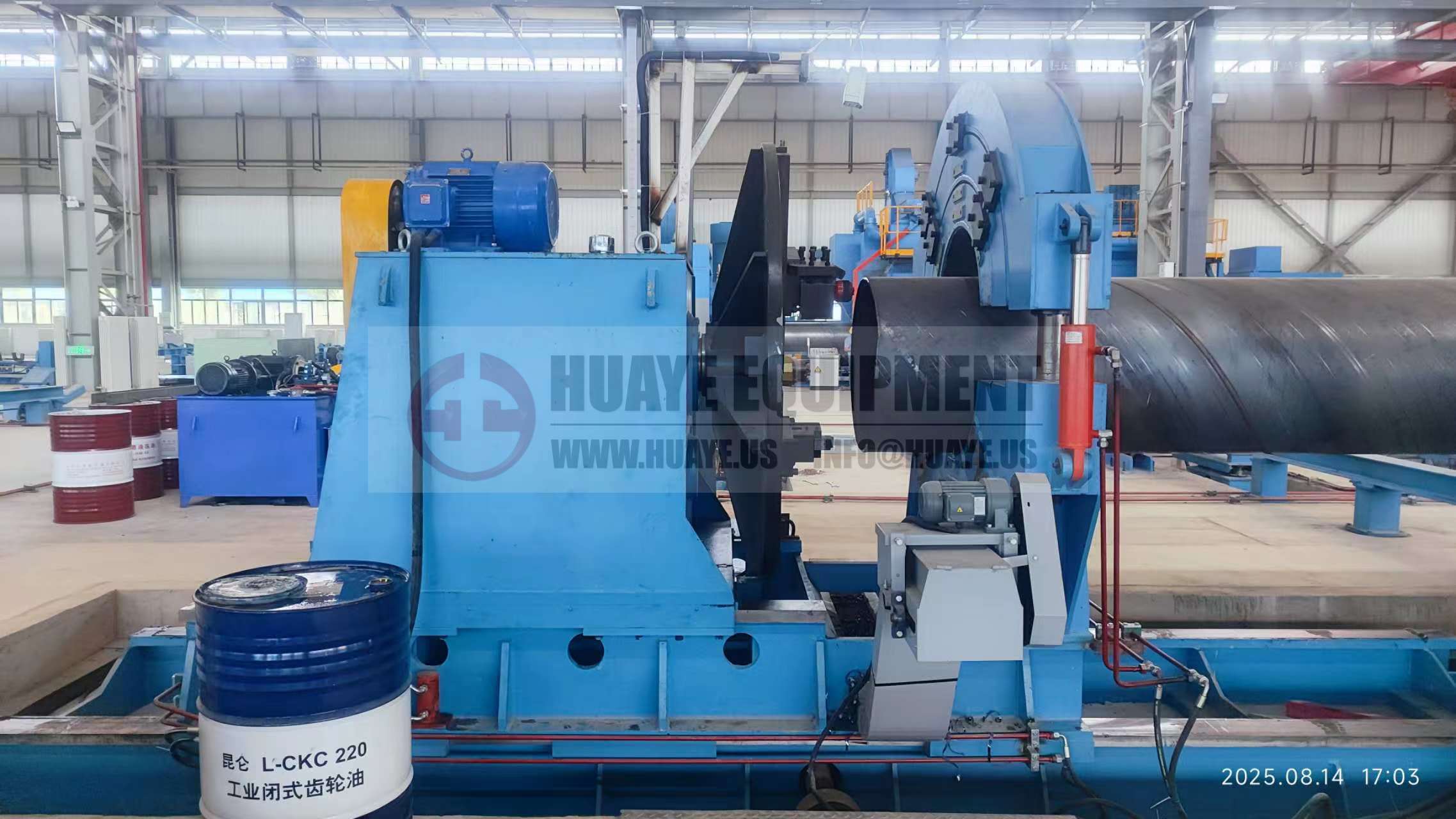
Pipe diameter is a critical factor influencing the configuration of a spiral welded pipe machine. Unlike equipment designed for a single, fixed specification, a machine capable of handling multiple diameters must feature an adjustable forming angle. Parameters such as the steel strip width, feed position, and target pipe diameter must be precisely calibrated.
During the production process, the steel strip enters the forming zone at a specific angle, where it is continuously bent into a cylindrical shape. There is a precise mathematical relationship between the forming angle, the width of the steel strip, and the resulting pipe diameter. When switching to a different diameter, the strip’s feed angle and the forming position must be recalibrated to ensure that the edges of the strip align accurately, creating stable conditions for the subsequent welding process.
For manufacturers that frequently switch between product specifications, the equipment should feature user-friendly guidance systems and forming mechanisms. Furthermore, it is essential to ensure that the equipment remains stable after adjustments, preventing issues such as deviations in pipe roundness or inconsistencies in the position of the weld seam.
Consequently, when selecting equipment, manufacturers should clearly define their typical pipe diameter range—including the minimum and maximum requirements—to ensure the machinery can consistently meet production standards within those parameters.
Optimizing Production Configuration Based on Steel Strip Thickness and Width
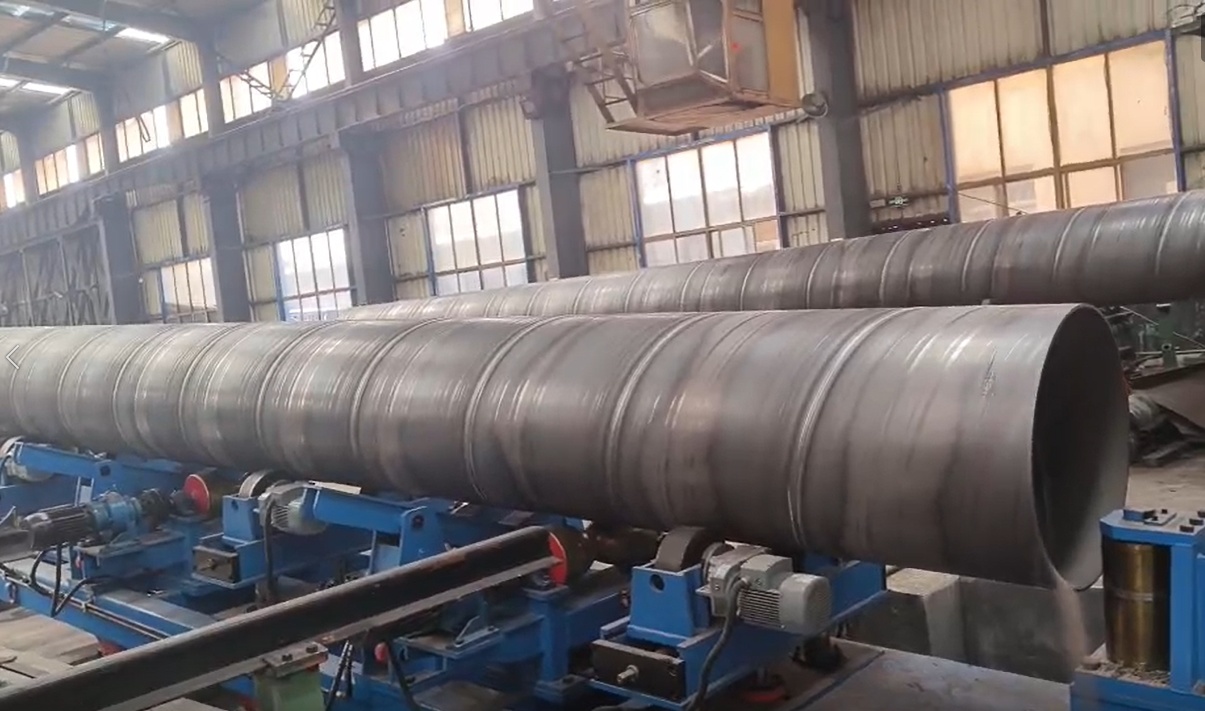
Beyond pipe diameter, the specifications of the raw material—the steel strip—also dictate the operational scope of a spiral welded pipe machine. Variations in strip thickness, width, and material composition directly affect deformation resistance during the forming process, the condition of the strip edges, and the overall load on the equipment. When producing thicker steel pipes, the steel strip typically requires greater forming force; therefore, the equipment’s rollers, drive mechanisms, and support structures must be capable of withstanding the associated loads. If the equipment lacks sufficient rigidity, forming deviations may occur during continuous production, compromising the dimensional consistency of the steel pipes.
The width of the steel strip must also align with the target pipe diameter and the specific forming process. Whenever the raw material width is changed, the feed position, forming angle, and edge-alignment status must be re-verified to prevent issues such as strip misalignment or uneven pipe formation.
For production tasks involving multiple specifications, it is advisable to compile a list of the thicknesses, widths, and material types of commonly used steel strips and cross-reference them against the equipment’s technical specifications. Furthermore, it is essential to ensure that upstream equipment—such as uncoilers, levelers, and feeding systems—can accommodate the specific material dimensions; this prevents scenarios where the forming equipment meets the requirements, but the raw material handling stage cannot support the process.
Ensuring Quality Across Different Pipe Specifications Through Welding Control
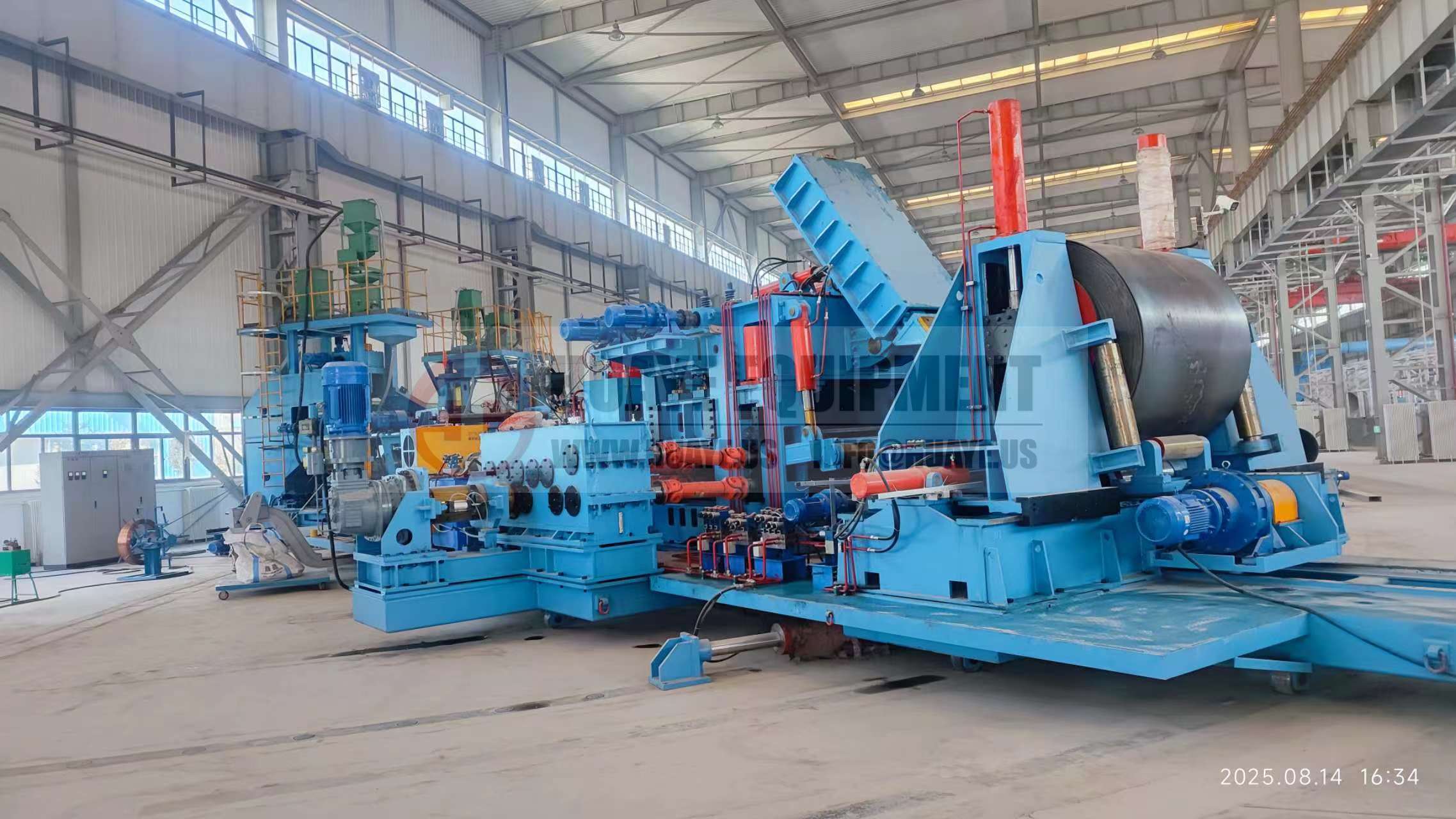
In the production of spiral-welded pipes, forming and welding are two critical, continuously linked stages. When pipe specifications change, welding parameters may also require adjustment to maintain weld quality and production stability.
For pipes with varying wall thicknesses, welding current, voltage, speed, and other relevant process parameters must be calibrated according to the material’s characteristics and the specific welding requirements. Inappropriate parameters can lead to issues such as incomplete penetration, poor weld bead formation, or other welding defects. Consequently, it is not feasible to use a single set of parameters for the production of all pipe specifications.
Additionally, the alignment of the steel strip edges directly influences welding outcomes. If the forming angle is not adjusted correctly, it may be impossible to maintain a consistent gap between the strip edges, thereby complicating weld quality control.
Manufacturers should maintain records of process parameters tailored to each specification and, following any changeover, verify the weld position, forming status, and weld quality. For products subject to stringent quality standards—such as pipes for water, oil, or natural gas transmission, as well as structural steel pipes—non-destructive testing or other necessary inspections should be conducted in accordance with applicable standards to ensure the finished products meet the requirements of their intended applications.
Coordinating Production Line Processes to Improve Efficiency in Multi-Specification Production
The ability of a spiral welded pipe machine to accommodate steel pipes of various specifications depends not only on the adjustment capabilities of the main unit but also on the integration of the entire production line.
A complete spiral welded pipe production line typically involves stages such as steel strip uncoiling, leveling, feeding, forming, welding, cut-to-length operations, and finished product conveying. When changes occur in pipe diameter, wall thickness, or production speed, each process stage must maintain a balanced operational rhythm.
For instance, switching to a thicker steel strip may alter the forming load and welding requirements. If the cutting unit cannot promptly adapt to the new pipe diameter or operating speed, cutting precision and continuous production efficiency may be compromised. Therefore, when evaluating equipment, enterprises should assess the coordination between the main unit and the welding, cutting, and control systems.
Furthermore, multi-specification production requires consideration of changeover times. A rational equipment layout, clear parameter logging, and user-friendly adjustment mechanisms can minimize repetitive setup and improve efficiency when switching between different orders.
Factories handling a wide range of specifications can schedule production based on order characteristics—grouping tasks with similar pipe diameters or material specifications—to reduce unnecessary equipment adjustments and maintain optimal production line performance.
Q&A: Common Questions Regarding Multi-Specification Production on Spiral Welded Pipe Machines
Q1: Can a single spiral welded pipe machine produce steel pipes of different diameters?
Yes, but the specific range depends on the equipment's design capabilities, forming mechanism, and adjustable parameters. Before purchasing, it is essential to define the target pipe diameter range and confirm that the equipment can handle both standard specifications and special order requirements.
Q2: Is it necessary to change equipment when producing steel pipes with different wall thicknesses?
Not necessarily. If the equipment's design capacity covers the target wall thickness, production can usually be achieved by adjusting relevant process parameters. However, for materials exceeding the equipment's capacity, parameter adjustments alone are insufficient, and the equipment configuration must be re-evaluated.
Q3: Why is re-adjustment required after changing pipe specifications?
Because changes in pipe diameter, steel strip width, and wall thickness can alter the forming angle, edge alignment, and welding parameters. Readjustment helps ensure the dimensions of the steel pipes, the quality of the weld seams, and the stability of the production process.
Q4: How can one determine whether a piece of equipment is suitable for the production of steel pipes with various specifications?
One should conduct a comprehensive assessment of the equipment’s pipe diameter range, applicable wall thickness, raw material compatibility, forming adjustment capabilities, welding control systems, and auxiliary equipment. Furthermore, the actual performance should be verified through trial production runs using representative specifications.
Key words:
All
- All
- Product Management
- News
- Introduction
- Enterprise outlets
- FAQ
- Enterprise Video
- Enterprise Atlas
Related News
What Are the Key Criteria for Choosing a 1420mm Spiral Pipe Mill Manufacturer?
Learn how to choose a 1420mm Spiral Pipe Mill manufacturer by evaluating equipment quality, technical expertise, production capacity, and after-sales support.
2026-11-11
Discover how an Industrial Steel Pipe Mill improves dimensional accuracy, welding quality, automation, and production efficiency through precise process control.
2026-11-11
Automation Development Trends and Application Value of Heavy Duty Steel Pipe Manufacturing Equipment
Explore the automation trends and applications of heavy duty steel pipe manufacturing equipment, from welding and pipe-end processing to intelligent production control.
2026-11-10


Service E-mail
Hotline:
Address
Taiyuan City, Shanxi Province
To inquire about our products, please leave your email to us and we will contact you within 24 hours.