





How to choose a spiral pipe machine: key features and buying tips
14 Oct,2026
Huaye
This article outlines key considerations for selecting a spiral pipe machine—covering equipment configuration, forming and welding capabilities, production efficiency, quality control, and maintenance services—to help enterprises choose equipment that meets their steel pipe production needs.
The spiral pipe machine is a core piece of equipment in steel pipe production lines, widely used in sectors such as water conveyance projects, oil and gas transportation, pile pipe manufacturing, and steel structure engineering. For enterprises planning to build or upgrade production lines, selecting the right equipment is crucial; it impacts not only the forming quality of the steel pipes but also production efficiency, material utilization rates, and the stability of downstream processing. Faced with various equipment configurations and technical specifications, procurement personnel must make comprehensive assessments based on product specifications, production requirements, and actual factory conditions. This article outlines how to select a spiral pipe machine suited to specific needs, covering aspects such as equipment selection, core functions, production capacity, and procurement considerations.
Clarify Production Requirements and Determine the Direction for Equipment Selection
Before purchasing a spiral pipe machine, enterprises must first define the intended use, specification range, and expected production capacity of the target products. Different application fields impose varying requirements regarding pipe diameter, wall thickness, length, and quality; these factors directly influence equipment configuration.
For steel pipes used in water conveyance projects, the focus should be on dimensional consistency, weld quality, and long-term operational reliability. Pipes intended for oil and gas transportation typically require stricter standards for welding stability, non-destructive testing, and dimensional control. Meanwhile, for the production of pile pipes and structural pipes, the equipment must meet specific requirements regarding diameter range, load-bearing capacity, and downstream processing needs.
Enterprises should also determine the width, thickness, and material of the steel strips to be processed and assess whether the product specification range needs to be expanded in the future. If production tasks involve pipes of various diameters, priority should be given to equipment capable of adjusting to these specifications.
Clarifying these fundamental conditions helps narrow down the selection process and prevents issues such as insufficient equipment capacity or a mismatch between equipment configuration and actual production needs.

Focus on Core Configurations and Evaluate Forming and Welding Capabilities
The performance of a spiral pipe machine depends not only on the main unit itself but also on the coordinated operation of various stages, including uncoiling, leveling, edge milling, feeding, forming, welding, and cutting.
1. Stability of the Forming System
The forming system is responsible for bending the continuous steel strip at a set angle and gradually shaping it into a spiral pipe body. The equipment must possess stable forming control capabilities to ensure the steel strip maintains a proper trajectory during continuous processing. Insufficient forming precision can lead to deviations in pipe diameter, deformation of the pipe body, or difficulties in subsequent welding operations.
2. Welding System Control Capabilities
Welding quality is directly linked to the structural integrity of the steel pipe. When purchasing, it is essential to understand the welding process employed, the method of controlling welding parameters, and the weld seam tracking capabilities. For enterprises requiring continuous production, a stable welding process minimizes weld defects and unplanned downtime, while providing a reliable foundation for subsequent inspections.
3. Fixed-Length Cutting and Dimensional Control
Once the steel pipe reaches the preset length, the cutting system performs the fixed-length operation. The cutting equipment must be synchronized with the forming speed and meet the length precision requirements for the target product. Procurement decisions should also account for the equipment's adaptability to various pipe diameters and wall thicknesses, as well as the impact of the cutting process on production cycle times.
4. Automation and Operating Systems
Automated controls assist operators in adjusting production parameters, monitoring equipment status, and coordinating various process stages. While appropriate automation helps reduce human error, enterprises must determine the optimal level of automation based on staff skills, maintenance capabilities, and actual production scale.

Evaluating Production Efficiency, Product Quality, and Material Adaptability
A suitable spiral pipe machine must strike a balance between production efficiency, processing quality, and material adaptability. Procurement personnel should not focus solely on theoretical production speeds but must also evaluate the entire production line's ability to operate continuously under actual working conditions.
First, it is important to understand the equipment's performance across varying steel strip thicknesses, widths, and pipe diameters. Since forming difficulty and welding requirements differ depending on product specifications, one must verify that the manufacturer's technical specifications cover the enterprise's primary production tasks.
Second, attention should be paid to details such as steel strip centering, edge preparation, forming precision, and welding parameter control. These stages are interconnected; deviations in any single area can increase the risk of rework, scrap, or failure during subsequent inspections.
Furthermore, enterprises should consider the time required for specification changes. For factories handling diverse orders and frequent product specification changes, the ease of equipment adjustment directly impacts production organization efficiency. For factories focused on mass production, priority should be given to evaluating continuous operational stability, equipment failure rates, and the degree of coordination between the various stages of the production line.
Whenever possible, it is advisable to request a trial production or on-site acceptance plan from the equipment supplier. This allows for the verification of pipe diameter, wall thickness, weld quality, cut-to-length precision, and continuous operational performance through actual processing, rather than relying solely on advertised specifications to judge equipment performance.
Key Factors Not to Overlook When Purchasing Spiral Pipe Machines
Once the technical specifications for the equipment have been determined, further evaluation is required regarding factory conditions, maintenance services, and future scalability.
1. Verify Factory Facilities and Infrastructure
Spiral pipe production lines typically require a long layout space and must be supported by appropriate power supply, lifting equipment, raw material storage, and finished product transport facilities. Before purchasing, confirm factory dimensions, floor load-bearing capacity, installation requirements, and logistics routes to avoid layout issues after the equipment arrives.
2. Assess Installation, Commissioning, and Technical Training
Complete equipment delivery should encompass more than just the main unit and auxiliary components. Enterprises should also clarify the scope of services—such as installation guidance, system commissioning, operator training, and trial production support—to ensure that production staff can operate the equipment correctly and handle common malfunctions.
3. Understand Spare Parts Supply and Ease of Maintenance
Long-term operation inevitably leads to component wear or the need for routine maintenance. During procurement, confirm the list of wear parts, the supply method for critical components, maintenance intervals, and technical support channels. Equipment with a rational design and easily accessible maintenance points generally helps minimize the impact of maintenance work on production.
4. Consider Future Scalability
If the enterprise plans to expand its range of steel pipe specifications or increase production capacity in the future, it should determine in advance whether the equipment supports the necessary functional upgrades and whether the current configuration integrates with future production line enhancements. Anticipating future growth needs helps reduce production downtime caused by repeated retrofitting.

Frequently Asked Questions (FAQ)
Q1: What are the most important parameters when selecting a spiral pipe machine?
Key parameters to focus on include the steel pipe diameter range, wall thickness range, steel strip specifications, forming capabilities, welding configuration, cutting precision, and actual production speed. At the same time, it is necessary to verify whether the equipment can meet the quality standards and application requirements for the target steel pipes.
Q2: Is the spiral pipe machine suitable for producing steel pipes of various specifications?
Yes, though this depends on the equipment's design range and adjustability. Before purchasing, you should provide details regarding common pipe diameters, wall thicknesses, and steel strip parameters to confirm that the equipment covers all target specifications and to identify which components require adjustment when changing specifications.
Q3: How can the reliability of the spiral pipe machine's welding quality be assessed?
Evaluation can be based on factors such as the welding process, parameter control, seam tracking, process monitoring, and the configuration of post-weld inspection systems. During final acceptance, the weld seam and the overall dimensions of the steel pipe should be inspected against applicable product standards and quality requirements.
Q4: Should the level of automation be considered when purchasing the equipment?
Yes. The level of automation affects ease of operation, parameter repeatability, and the coordination of the production line. However, higher automation is not always better; enterprises should select a suitable solution based on production scale, product type, staffing, and maintenance capabilities.
Q5: What should be confirmed with the supplier before purchasing a spiral pipe machine?
It is advisable to confirm—in advance—the equipment's technical parameters, applicable pipe specifications, production line configuration, installation requirements, acceptance criteria, training details, spare parts availability, and the scope of after-sales service. Additionally, the equipment's compliance with requirements should be verified through technical documentation and actual trial production.
Key words:
All
- All
- Product Management
- News
- Introduction
- Enterprise outlets
- FAQ
- Enterprise Video
- Enterprise Atlas
Related News
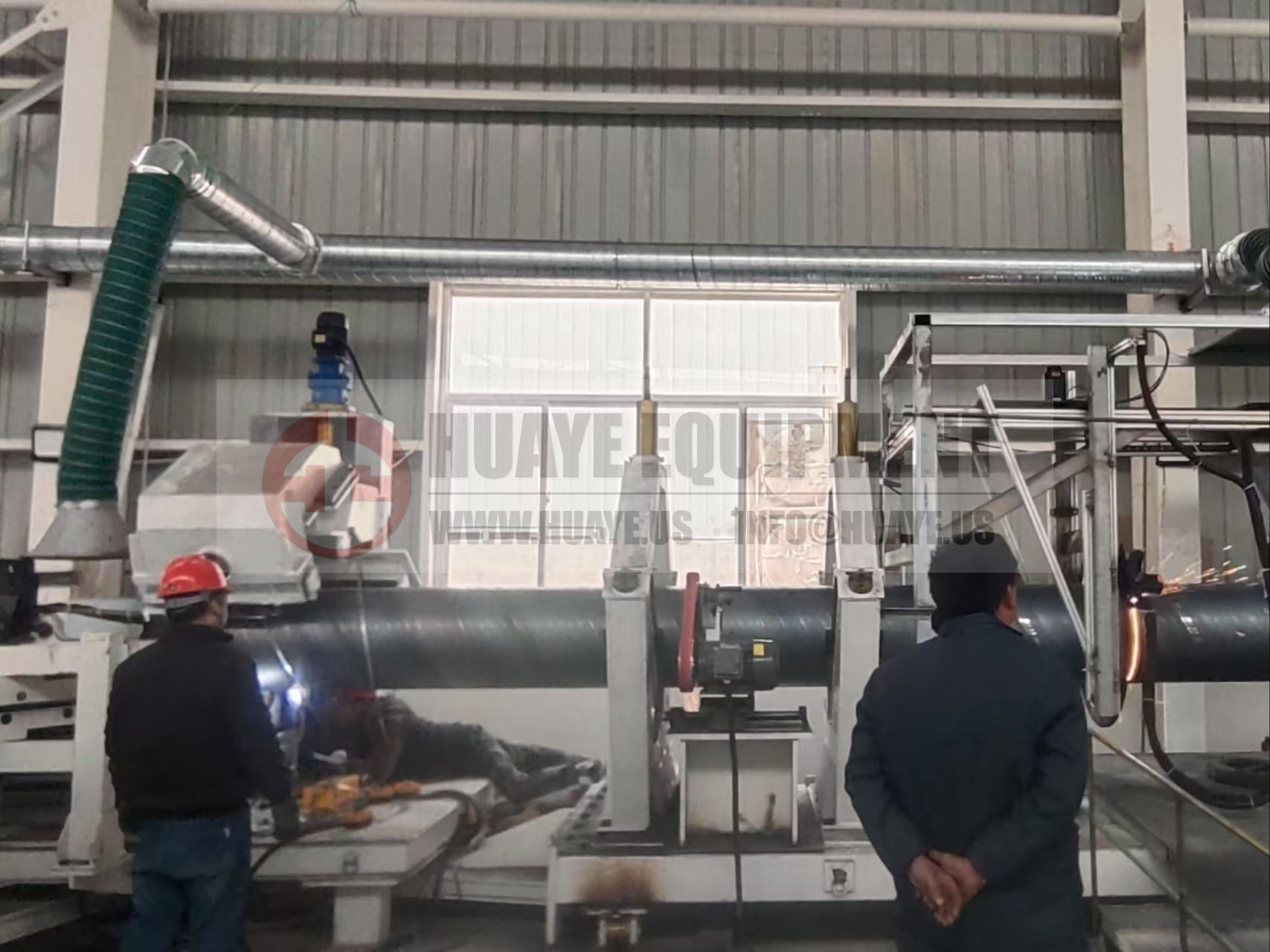
What Are the Key Criteria for Choosing a 1420mm Spiral Pipe Mill Manufacturer?
Learn how to choose a 1420mm Spiral Pipe Mill manufacturer by evaluating equipment quality, technical expertise, production capacity, and after-sales support.
2026-11-11
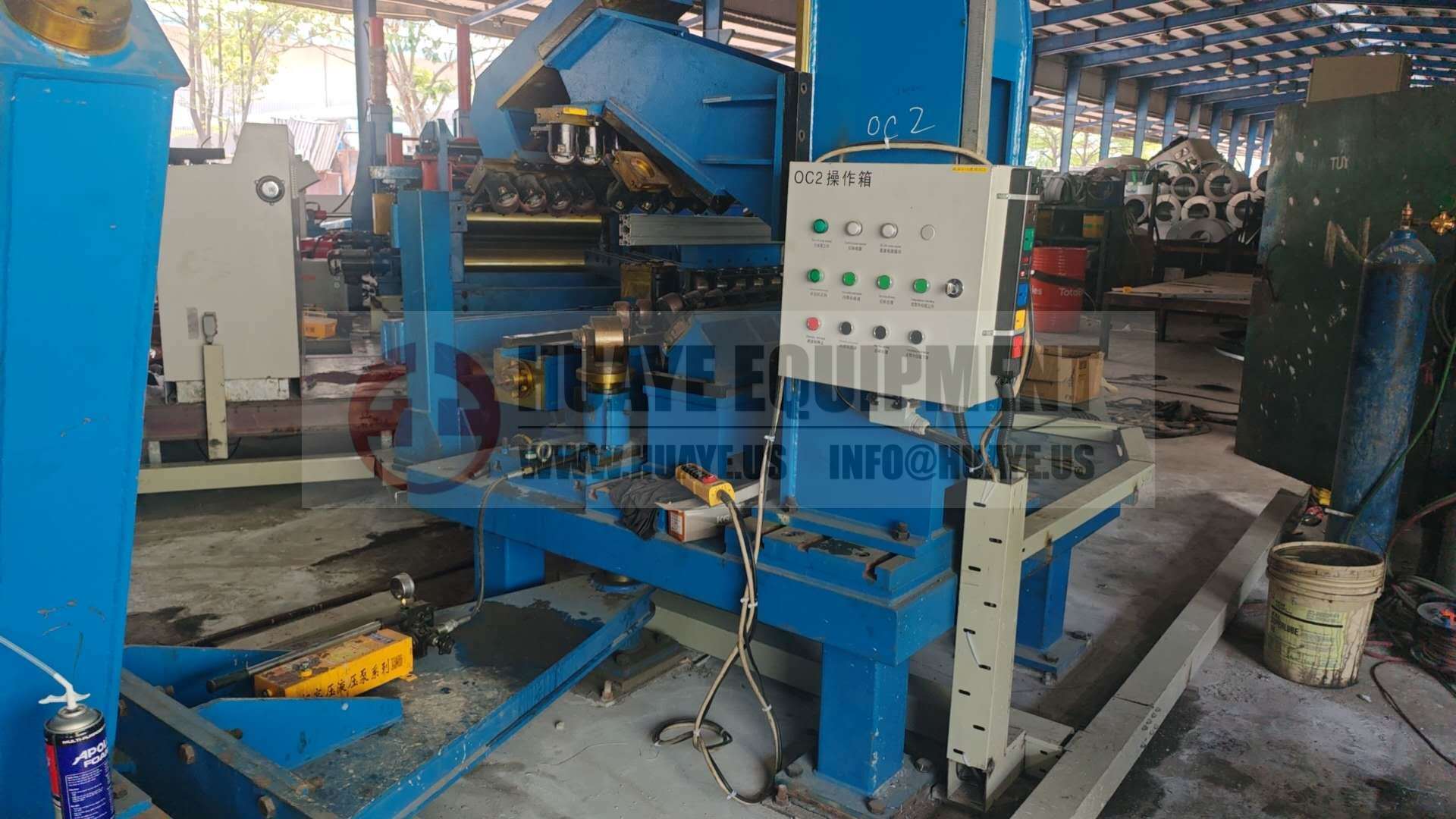
Discover how an Industrial Steel Pipe Mill improves dimensional accuracy, welding quality, automation, and production efficiency through precise process control.
2026-11-11
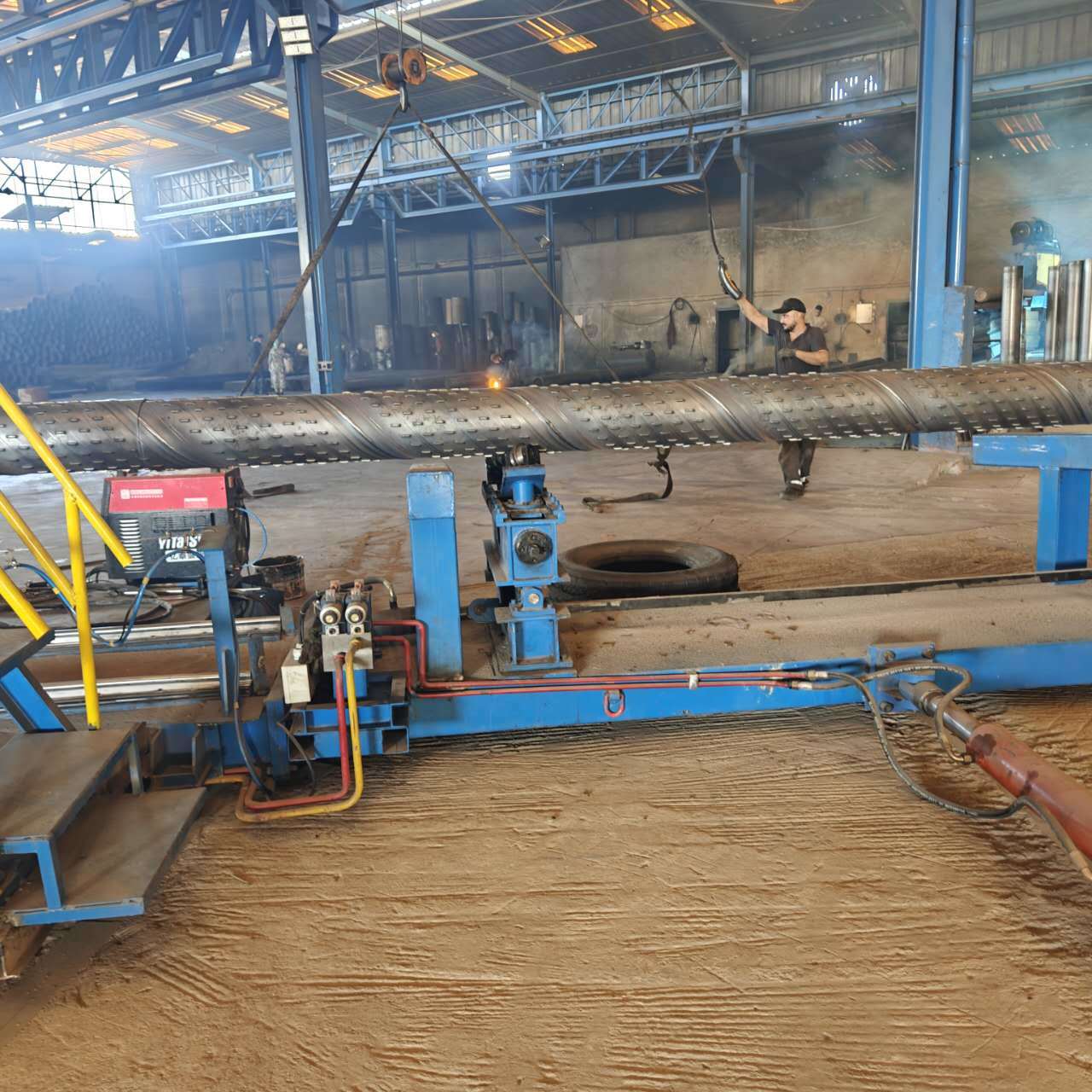
Automation Development Trends and Application Value of Heavy Duty Steel Pipe Manufacturing Equipment
Explore the automation trends and applications of heavy duty steel pipe manufacturing equipment, from welding and pipe-end processing to intelligent production control.
2026-11-10


Service E-mail
Hotline:
Address
Taiyuan City, Shanxi Province
To inquire about our products, please leave your email to us and we will contact you within 24 hours.