





Spiral welding machine: complete guide to types, selection, and applications in India
13 Oct,2026
Huaye
Gain insights into the equipment types, operating principles, and key selection criteria for spiral welding machines, and explore their applications in water conveyance, oil and gas transport, and piling projects in India—helping enterprises optimize steel pipe production processes and welding quality.
With the development of infrastructure, water supply projects, energy transmission, and industrial manufacturing in India, the demand for steel pipes across various engineering sectors continues to rise. For manufacturers requiring stable production of large-diameter steel pipes, the spiral welding machine is a crucial piece of equipment. This machine operates by continuously forming steel strip and welding it along a helical path to produce spiral-welded pipes that meet specific requirements. Understanding the different equipment types, key selection factors, and specific application needs of the Indian market helps enterprises effectively plan their production lines, thereby enhancing manufacturing efficiency and product consistency.
Working Principle and Basic Components of the Spiral Welding Machine
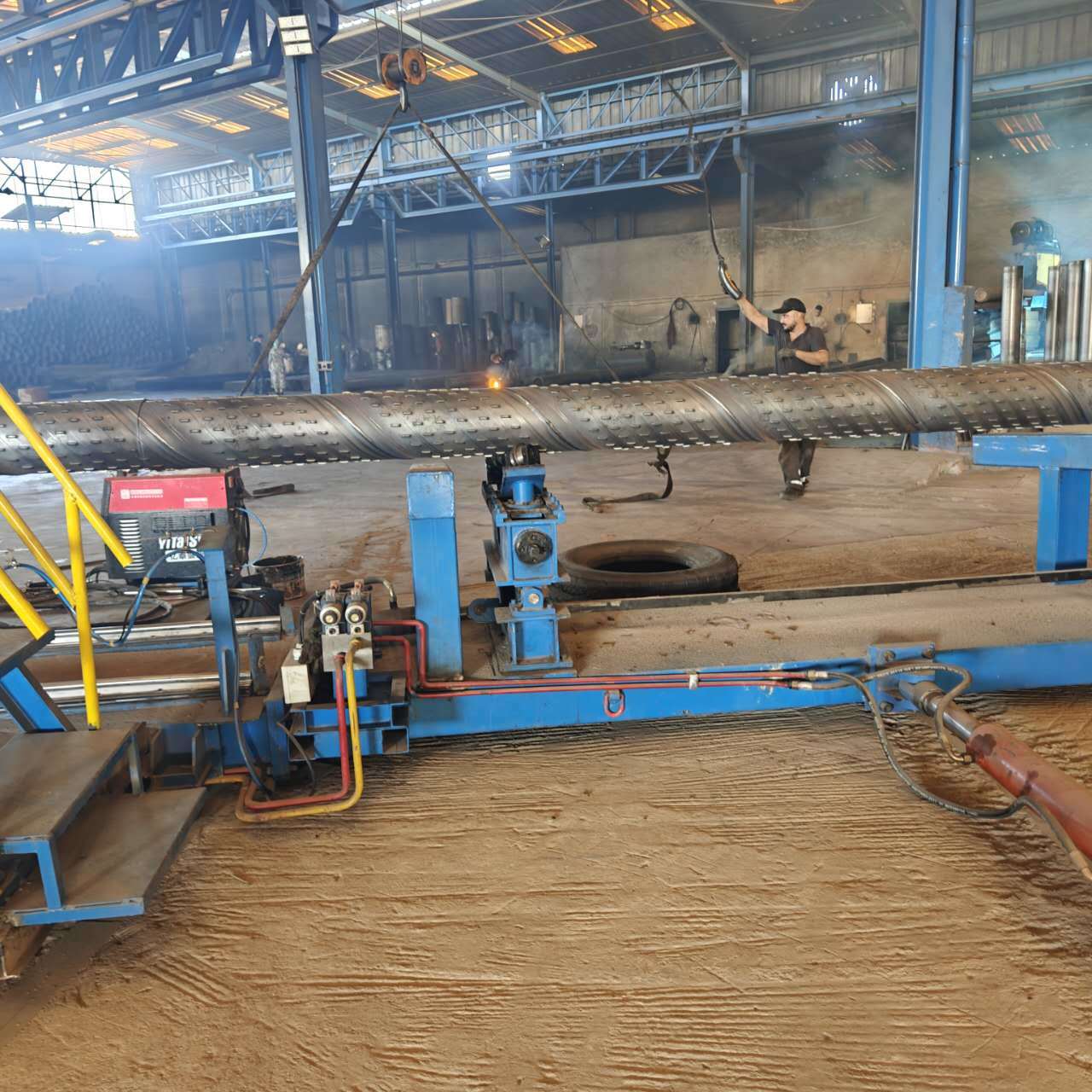
Spiral welding machines are typically used to produce spiral-welded pipes. The core principle involves gradually bending a continuous steel strip into a cylindrical shape at a set angle while continuously welding the adjacent edges of the strip during the forming process, ultimately creating a pipe with a helical weld seam.
The production process generally encompasses steps such as steel strip uncoiling, leveling, edge preparation, forming, welding, cut-to-length operations, and finished product inspection. After entering the production line, the steel strip undergoes pretreatment and passes through guiding devices; a forming mechanism then controls the entry angle and the cylinder diameter. Subsequently, the welding system performs the weld according to preset parameters. Once the formed pipe reaches the specified length, it is cut and proceeds to the quality inspection stage.
A complete spiral-welded pipe production line typically comprises an uncoiler, leveling unit, forming mechanism, welding system, cutting equipment, conveying system, and electrical control system. Coordinated operation of these components is essential to ensure continuous strip feeding, stable weld quality, and adherence to dimensional specifications.
For Indian steel pipe manufacturers, factors such as the equipment's continuous operating capability, steel strip utilization rate, and adaptability to various product specifications are critical considerations when planning a production line.

What Are the Main Types of Spiral Welding Machines?
Since product positioning and production requirements vary among enterprises, spiral welding machines can be categorized based on their forming methods, welding processes, and automation configurations.
1. Continuous Spiral Welded Pipe Production Line
Continuous production lines emphasize the coordination between steel strip feeding, pipe forming, and welding processes, making them ideal for manufacturing enterprises with stable orders and continuous production needs. An optimized production line layout helps minimize unnecessary downtime and enhances overall production efficiency.
2. Submerged Arc Welding (SAW) Equipment for Spiral Welded Pipes
Submerged arc welding is a common welding process in spiral welded pipe production. During welding, the arc burns beneath a layer of granular flux, facilitating a stable welding process and high deposition efficiency. The choice between single-sided and double-sided welding should be determined based on pipe specifications, quality requirements, and the specific production process.
3. Automated Control Equipment
Production lines with high levels of automation utilize control systems to coordinate forming angles, steel strip feeding, welding speeds, and cutting operations. Some systems can also record critical process parameters, enabling operators to monitor production status and minimize variations caused by manual operation.
When selecting equipment, enterprises should not focus solely on the level of automation; they must also verify that the equipment meets the requirements for the target steel pipe's diameter, wall thickness, material, and welding standards.

Factors to Consider When Selecting a Spiral Welding Machine in India
Infrastructure projects, energy engineering initiatives, and industrial manufacturing needs vary across different regions of India. Therefore, when purchasing spiral welded pipe equipment, enterprises must evaluate options based on their specific product focus and local project requirements.
1. Define the Steel Pipe Specification Range
Before purchasing, it is essential to determine the commonly required steel pipe diameters, wall thicknesses, lengths, and steel grades. The equipment's forming capabilities must cover the target product range; additionally, the potential for future product specification expansion should be considered to avoid situations where the equipment cannot meet order demands after commissioning.
2. Confirm Welding Quality and Applicable Standards
Steel pipes intended for water transport, oil and gas transmission, piling, and structural engineering may be subject to different technical standards. Enterprises should clearly define requirements for weld quality, dimensional tolerances, and inspection protocols in advance, and ensure that the equipment configuration supports the necessary production processes.
3. Evaluating Production Capacity and Automation Levels
Production efficiency depends not only on welding speed but also on factors such as steel strip loading, forming adjustments, cutting cycle times, and equipment downtime. For mass-production enterprises, the focus should be on the coordination between various process steps and the efficiency of changeovers between different product specifications.
4. Assessing Local Installation and Technical Support
Manufacturing enterprises in India should also consider practical aspects such as equipment transportation, factory layout, installation and commissioning, operator training, and spare parts supply. Comprehensive technical support helps enterprises reduce the time required to prepare for production and enhances the long-term operational stability of the equipment.
5. Verifying Energy and Facility Conditions
Before procurement, it is essential to check the factory's power supply, installation space, foundation load-bearing capacity, and material handling conditions. Enterprises planning to expand their production lines should also allocate adequate space for equipment maintenance and future upgrades.

Key Application Areas for Spiral Welding Machines in India
Spiral welded pipes are characterized by their versatility in specifications and suitability for continuous production, making them applicable across various infrastructure and industrial manufacturing sectors. Their actual application depends on factors such as the pipe material, dimensions, welding quality, and relevant standard requirements.
Water Transmission and Supply Projects: Spiral welded pipes can be used for municipal water supply, industrial water transport, and related pipeline projects. Enterprises must select appropriate pipe materials and anti-corrosion treatments based on the conveyed medium, operating pressure, and service environment.
Oil and Gas Transportation: Spiral welded pipes that meet relevant technical specifications can be used in certain oil and gas transportation projects. Such applications typically entail strict requirements regarding welding processes, material properties, and non-destructive testing; production and acceptance must comply with project standards.
Construction Piling Projects: Steel pipe piles are widely used in foundation engineering for bridges, ports, and large-scale buildings. Spiral welded pipe production lines can manufacture piles of various sizes to meet specific engineering design requirements.
Structural Steel Pipe Manufacturing: Spiral welded pipes are also suitable for use in certain industrial facilities, engineering structures, and other load-bearing applications. Manufacturers should determine product specifications and quality control protocols based on specific load conditions and design requirements. As infrastructure projects in India continue to advance, steel pipe manufacturers can strategically plan their equipment configuration and product focus by considering regional demand, target customers, and their own processing capabilities.
Spiral Welding Machine: Frequently Asked Questions
Q1: What products are primarily produced by a spiral welding machine?
It is mainly used to produce steel pipes with spiral weld seams; these products are applicable to water conveyance projects, oil and gas transportation, piling works, and certain structural engineering applications.
Q2: Is a spiral welded pipe machine suitable for small-scale manufacturing enterprises?
Suitability depends on factors such as order volume, product specifications, and factory conditions. Enterprises should comprehensively evaluate the production line's actual capacity, staffing requirements, maintenance capabilities, and future development plans.
Q3: Can spiral welded pipe equipment produce steel pipes of different diameters?
Some machines can produce pipes of varying diameters by adjusting forming parameters; however, the adjustable range is constrained by the equipment structure, steel strip width, material thickness, and process conditions. Buyers should clarify the equipment's specification range with the supplier prior to purchase.
Q4: How can the welding quality of spiral welded pipes be ensured?
It is essential to select the appropriate welding process, control welding parameters and forming precision, and conduct thorough inspections of raw materials, weld seams, and finished product dimensions. For specific engineering applications, relevant quality standards and acceptance procedures must also be followed.
Q5: What should Indian enterprises prioritize when purchasing a spiral welded pipe machine?
Key considerations include target pipe specifications, production efficiency, welding quality, the level of automation, local technical support, and the equipment's compatibility with the existing factory facility. Aligning these factors with actual order requirements is crucial for selecting equipment that best suits the company's production plan.
Key words:
All
- All
- Product Management
- News
- Introduction
- Enterprise outlets
- FAQ
- Enterprise Video
- Enterprise Atlas
Related News

What Are the Key Criteria for Choosing a 1420mm Spiral Pipe Mill Manufacturer?
Learn how to choose a 1420mm Spiral Pipe Mill manufacturer by evaluating equipment quality, technical expertise, production capacity, and after-sales support.
2026-11-11

Discover how an Industrial Steel Pipe Mill improves dimensional accuracy, welding quality, automation, and production efficiency through precise process control.
2026-11-11
Automation Development Trends and Application Value of Heavy Duty Steel Pipe Manufacturing Equipment
Explore the automation trends and applications of heavy duty steel pipe manufacturing equipment, from welding and pipe-end processing to intelligent production control.
2026-11-10


Service E-mail
Hotline:
Address
Taiyuan City, Shanxi Province
To inquire about our products, please leave your email to us and we will contact you within 24 hours.