





What Factors Affect the Forming Accuracy of Heavy Duty Welded Pipe Manufacturing Equipment?
27 Oct,2026
Huaye
This article explains how material quality, equipment settings, process control, and maintenance affect the forming accuracy of heavy duty welded pipe manufacturing equipment.
In heavy-duty welded pipe manufacturing, forming accuracy directly affects dimensional stability, weld quality, and subsequent processing performance. For manufacturers producing large-diameter and thick-walled steel pipes, heavy duty welded pipe manufacturing equipment must maintain stable processing capabilities and ensure proper coordination between strip feeding, forming control, and welding operations. Any deviation during these stages may result in insufficient pipe roundness, diameter variations, or inaccurate edge alignment. Therefore, understanding the key factors affecting forming accuracy helps manufacturers optimize production processes and improve product quality.

Raw Material Quality and Dimensional Stability
Raw material quality is a fundamental factor affecting pipe forming accuracy. The thickness, width, flatness, and mechanical properties of steel strips influence their deformation behavior during forming. If the strip thickness varies significantly, uneven forces may develop during processing, affecting the overall dimensions of the finished pipe.
In addition, uneven strip edges and visible surface defects may affect subsequent edge alignment and welding performance. For heavy duty welded pipe manufacturing equipment, consistent raw material quality helps reduce the need for repeated adjustments and improves production consistency.
Before production begins, manufacturers should inspect steel strip specifications to ensure that thickness, width, and surface conditions meet the required standards. Proper storage and transportation practices are also important to prevent deformation or damage to the strips and minimize forming errors from the beginning.
Forming Equipment Structure and Parameter Settings
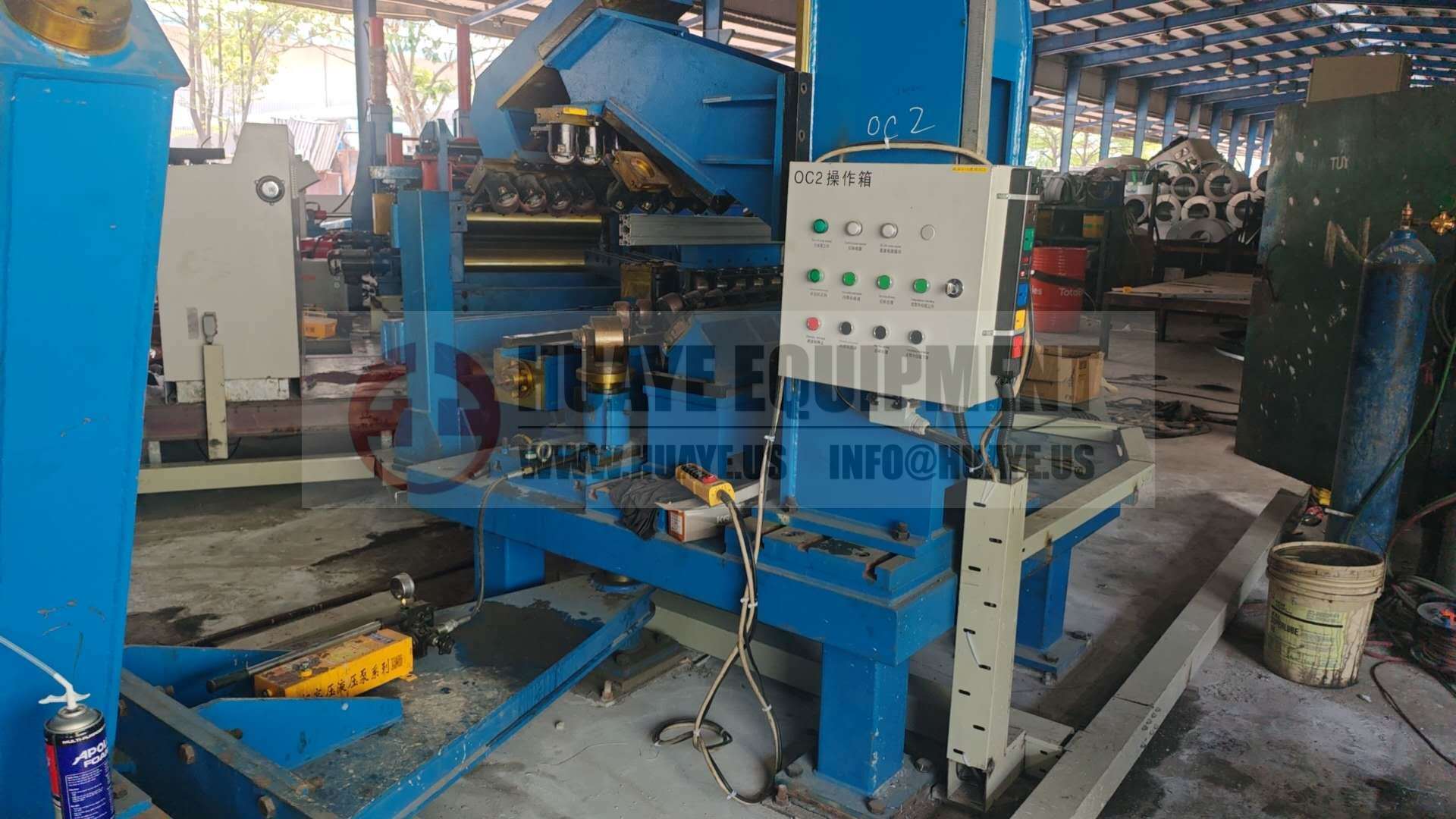
Equipment design and parameter settings are other key factors determining forming accuracy. Heavy-duty welded pipe equipment typically uses multiple forming rolls, guiding mechanisms, and adjustment devices to gradually shape steel strips into the required tubular structure. If the positions, gaps, or pressure settings of the forming rolls are inappropriate, the finished pipes may develop ovality, localized deformation, or edge misalignment.
For heavy duty welded pipe manufacturing equipment, different pipe diameters, wall thicknesses, and material specifications generally require different processing parameters. During equipment adjustment, manufacturers should configure forming angles, roll positions, and strip feeding speeds according to specific production requirements. Appropriate parameter settings help prevent dimensional deviations caused by mismatched processing conditions.
Meanwhile, long-term equipment operation may lead to roll wear, loose guiding components, and changes in mechanical clearances, all of which can reduce forming accuracy. Manufacturers should regularly inspect critical components, perform necessary calibration, and maintain the equipment to ensure consistent forming performance.

Production Process Control and Welding Coordination
Forming accuracy depends not only on the equipment itself but also on production process control. During continuous strip feeding and forming, unstable operating speeds, improper tension control, or strip misalignment may affect pipe geometry and edge alignment.
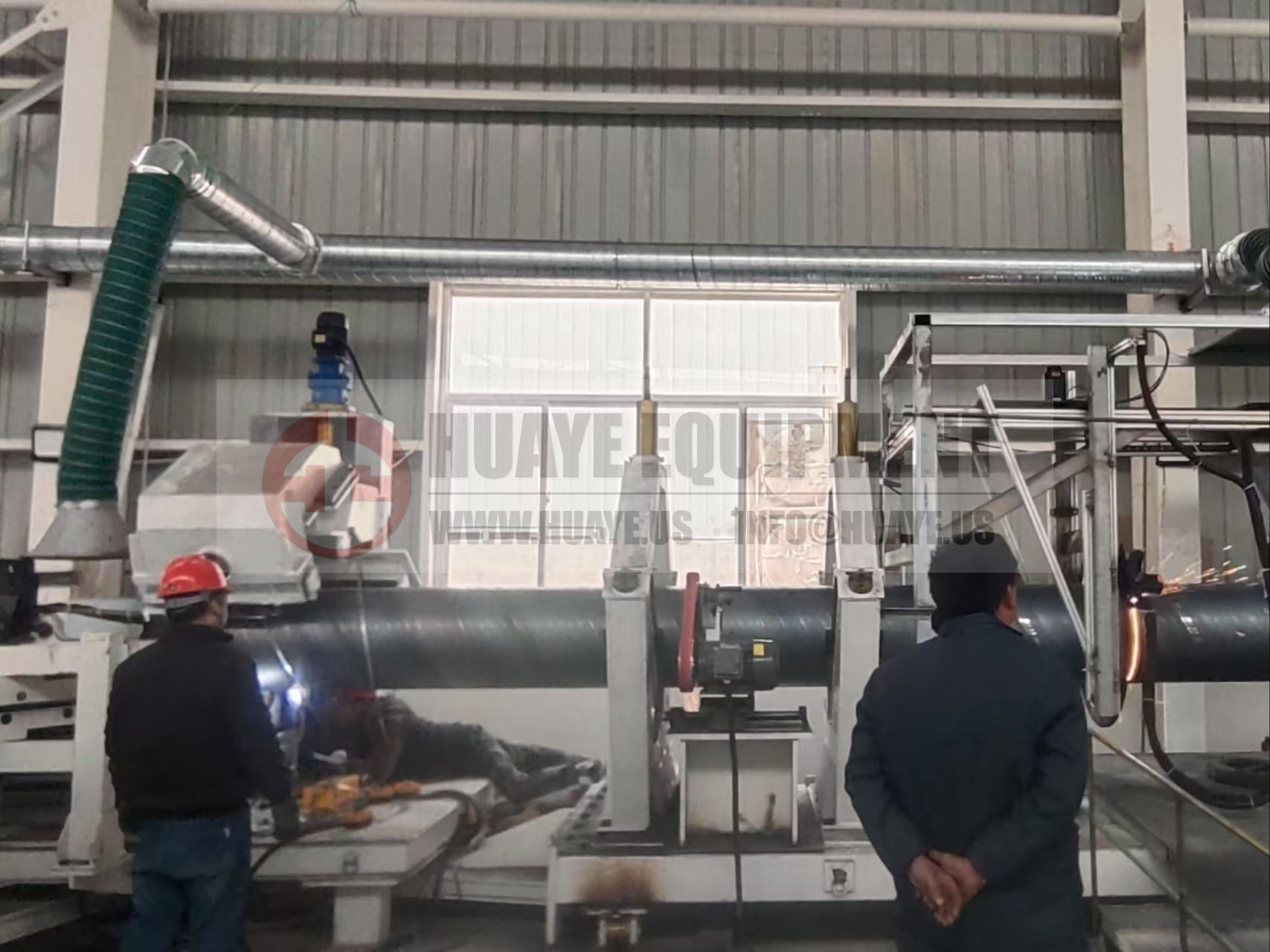
For heavy duty welded pipe manufacturing equipment, a stable feeding system and effective guiding mechanisms help keep steel strips on the intended processing path, reducing misalignment and localized deformation. Operators should continuously monitor forming conditions and identify changes in pipe diameter or abnormal edge gaps in a timely manner to prevent deviations from accumulating throughout production.
The welding stage must also work in coordination with the forming process. If the strip edges are not properly aligned, even correctly configured welding parameters may fail to ensure consistent weld quality and overall pipe geometry. Therefore, manufacturers should strengthen coordination between forming and welding operations and use online monitoring and dimensional measurements to adjust production parameters when necessary. These measures help improve the consistency of finished steel pipes.
Equipment Maintenance and Forming Accuracy Management
Regular equipment maintenance is essential for maintaining forming accuracy over the long term. Heavy-duty welded pipe production equipment often operates under substantial mechanical loads. Without proper maintenance, critical components may experience roll wear, increased transmission clearances, and reduced positioning accuracy. These changes may initially be difficult to detect but can gradually affect pipe dimensions and shape as operating hours increase.
Manufacturers can establish a regular inspection schedule focusing on forming rolls, guiding mechanisms, transmission components, and measuring instruments. Recording production parameters and inspection results for different pipe specifications also helps identify potential problems. By comparing actual dimensions with target specifications, manufacturers can detect deviations earlier and determine their underlying causes more effectively.
In addition, operator expertise influences the effectiveness of equipment adjustments. Standardized training, consistent parameter management, and comprehensive quality inspection procedures help minimize errors caused by manual operation. For heavy duty welded pipe manufacturing equipment, combining equipment maintenance, process control, and quality management is essential for continuously improving forming accuracy while reducing rework and material waste.

Frequently Asked Questions (FAQ)
1. What are the main factors affecting the forming accuracy of heavy duty welded pipe manufacturing equipment?
The main factors include raw material dimensions and flatness, forming roll positions, equipment condition, processing parameters, steel strip feeding stability, and coordination between forming and welding operations.
2. How can manufacturers reduce forming errors during heavy-duty welded pipe production?
Manufacturers should inspect raw material quality, configure appropriate forming parameters, maintain stable strip feeding, and regularly calibrate forming rolls and guiding mechanisms. Dimensional inspections should also be conducted to identify and correct deviations promptly.
3. Why does equipment maintenance affect pipe forming accuracy?
Worn forming rolls, changes in mechanical clearances, and loose positioning components can all cause processing deviations. Regular maintenance helps keep equipment operating consistently, reducing dimensional errors and fluctuations in product quality.
Key words:
All
- All
- Product Management
- News
- Introduction
- Enterprise outlets
- FAQ
- Enterprise Video
- Enterprise Atlas
Related News
What Are the Key Criteria for Choosing a 1420mm Spiral Pipe Mill Manufacturer?
Learn how to choose a 1420mm Spiral Pipe Mill manufacturer by evaluating equipment quality, technical expertise, production capacity, and after-sales support.
2026-11-11
Discover how an Industrial Steel Pipe Mill improves dimensional accuracy, welding quality, automation, and production efficiency through precise process control.
2026-11-11
Automation Development Trends and Application Value of Heavy Duty Steel Pipe Manufacturing Equipment
Explore the automation trends and applications of heavy duty steel pipe manufacturing equipment, from welding and pipe-end processing to intelligent production control.
2026-11-10


Service E-mail
Hotline:
Address
Taiyuan City, Shanxi Province
To inquire about our products, please leave your email to us and we will contact you within 24 hours.