




Pipe welding machine manufacturers: what to look for before buying
10 Oct,2026
Huaye
Understand the key factors for selecting pipe welding machine manufacturers—including manufacturing capabilities, welding processes, equipment specifications, automation configurations, and after-sales service—to help enterprises choose the right pipe welding equipment.
In the steel pipe manufacturing industry, selecting the right pipe welding machine manufacturers impacts not only processing capabilities but also weld quality, production efficiency, and long-term maintenance. For enterprises planning to build new production lines or upgrade existing equipment, procurement decisions should go beyond mere technical specifications; they require a comprehensive evaluation of the manufacturer's technical expertise, production experience, equipment configuration, quality control, and after-sales service. By establishing clear evaluation criteria, enterprises can more accurately determine whether the equipment meets their specific production needs and minimize uncertainties during subsequent installation, commissioning, and long-term operation.
Assessing the Manufacturer's Industry Experience and Production Capabilities
When selecting a manufacturer of welded pipe equipment, the first step is to understand their practical experience in the field of steel pipe forming and welding machinery. Different types of welded pipe production lines differ significantly in terms of equipment structure, welding processes, and control systems. Manufacturers with relevant project experience generally have a better understanding of how different pipe diameters, wall thicknesses, and materials influence equipment configuration requirements.
Procurement personnel should focus on the manufacturer's product range, which may include high-frequency welded pipe equipment, longitudinal welded pipe lines, spiral welded pipe equipment, and related auxiliary processing machinery. At the same time, it is essential to verify their capabilities in areas such as mechanical design, electrical control, equipment assembly, and full-line commissioning.
The manufacturer's own production facilities also warrant attention. Factors such as the presence of stable machining workshops, assembly areas, quality inspection facilities, and a professional technical team can significantly influence the organization and quality control of the equipment manufacturing process.
If circumstances permit, one can request case studies of equipment similar to the target project to understand processing specifications, production workflows, and real-world application performance. Verifying specific project experience makes it easier to determine whether the manufacturer's technical capabilities align with procurement needs compared to simply reviewing promotional materials.

Verifying the Suitability of Welding Processes and Equipment Configuration
Different welded pipe projects impose varying requirements on welding processes; therefore, a manufacturer's ability to provide a suitable equipment solution tailored to the actual product is a critical aspect of the procurement evaluation.
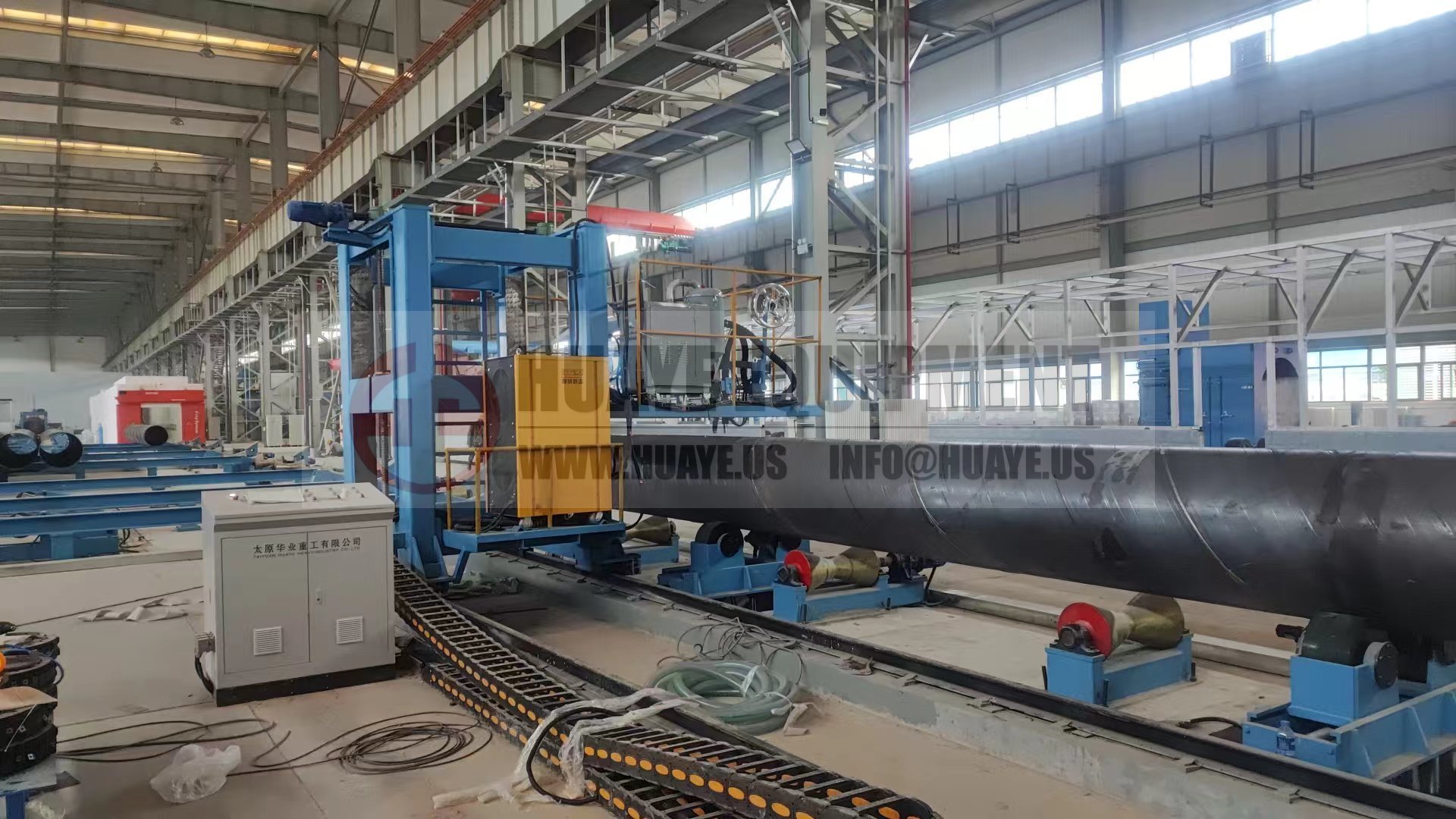
For the continuous production of longitudinal welded pipes, high-frequency welding equipment typically needs to be integrated with processes such as steel strip forming, squeeze welding, sizing, and cutting. For spiral welded pipe production, key stages such as steel strip conveyance, spiral forming, welding, and subsequent inspection must be considered. Other welding processes should be selected based on material properties, wall thickness, and product standards.
Before procurement, clearly communicate the intended use, material, diameter range, wall thickness range, and production requirements of the target steel pipes to the manufacturer, and ask them to explain the rationale behind the equipment configuration.
In addition to the main welding unit, attention should be paid to auxiliary units such as uncoiling, leveling, forming, sizing, cutting, and conveying. If processing capacities between these units are mismatched, the operational efficiency of the entire production line may suffer, even if the main welding unit performs well.
An excellent equipment solution is not necessarily the most complex one; rather, it is a solution that meets actual product requirements while balancing production efficiency, ease of operation, and future maintenance.
Focus on Technical Parameters and Quality Control Capabilities
Technical parameters serve as a crucial basis for evaluating the reliability of a manufacturer's proposal. Procurement personnel should request clear, comprehensive technical documentation and verify that key parameters align with project requirements.
Key details to confirm include the steel pipe diameter range, applicable wall thickness, material specifications, production speed, welding method, finished product length, and equipment adjustment range. If the production of multiple pipe specifications is required, the procedures for size changeovers and commissioning requirements should also be understood.
Weld seam quality is equally important. The manufacturer should be able to explain how the equipment controls the welding process and integrates with weld inspection, dimensional measurement, and subsequent quality checks. Relevant quality standards should be verified based on the specific application—such as oil and gas pipelines, industrial fluid transport pipes, or structural pipes.
Furthermore, attention should be paid to machining precision, the assembly of critical components, control system commissioning, and factory inspection procedures. Manufacturers should be asked to provide equipment acceptance criteria and necessary inspection records to ensure technical requirements go beyond mere verbal promises.
For critical projects, it is advisable to arrange a trial run prior to delivery, using materials that meet actual production requirements to verify operational stability, product dimensions, and weld quality.
Evaluating Automation Levels and Production Line Scalability
As demands for production efficiency and product consistency in steel pipe manufacturing rise, automation capabilities have become a key factor when selecting a manufacturer of welded pipe equipment.
Purchasers should verify whether the equipment offers features such as welding parameter control, operational status monitoring, fault alarms, in-line cutting, and production data logging. A well-designed automation setup minimizes variations caused by manual operation and helps operators detect production anomalies promptly.
However, the level of automation should align with the enterprise's production scale and technical capabilities. If the company primarily produces small batches of fixed-specification pipes, priority should be given to equipment stability and ease of operation; conversely, if the product range is diverse and production cycles are rapid, features such as automatic size changeover, centralized control, and production data management should be evaluated.
Equipment scalability also warrants advance planning. Factors such as the potential for adding new pipe specifications, upgrading inspection systems, or integrating with other production units in the future can influence the initial equipment selection.
Therefore, during the procurement process, it is advisable to discuss current production needs and potential future expansion paths with the manufacturer. This ensures the chosen solution meets immediate requirements without imposing unnecessary constraints on future production adjustments.
Understanding After-Sales Service, Installation, Commissioning, and Maintenance Support
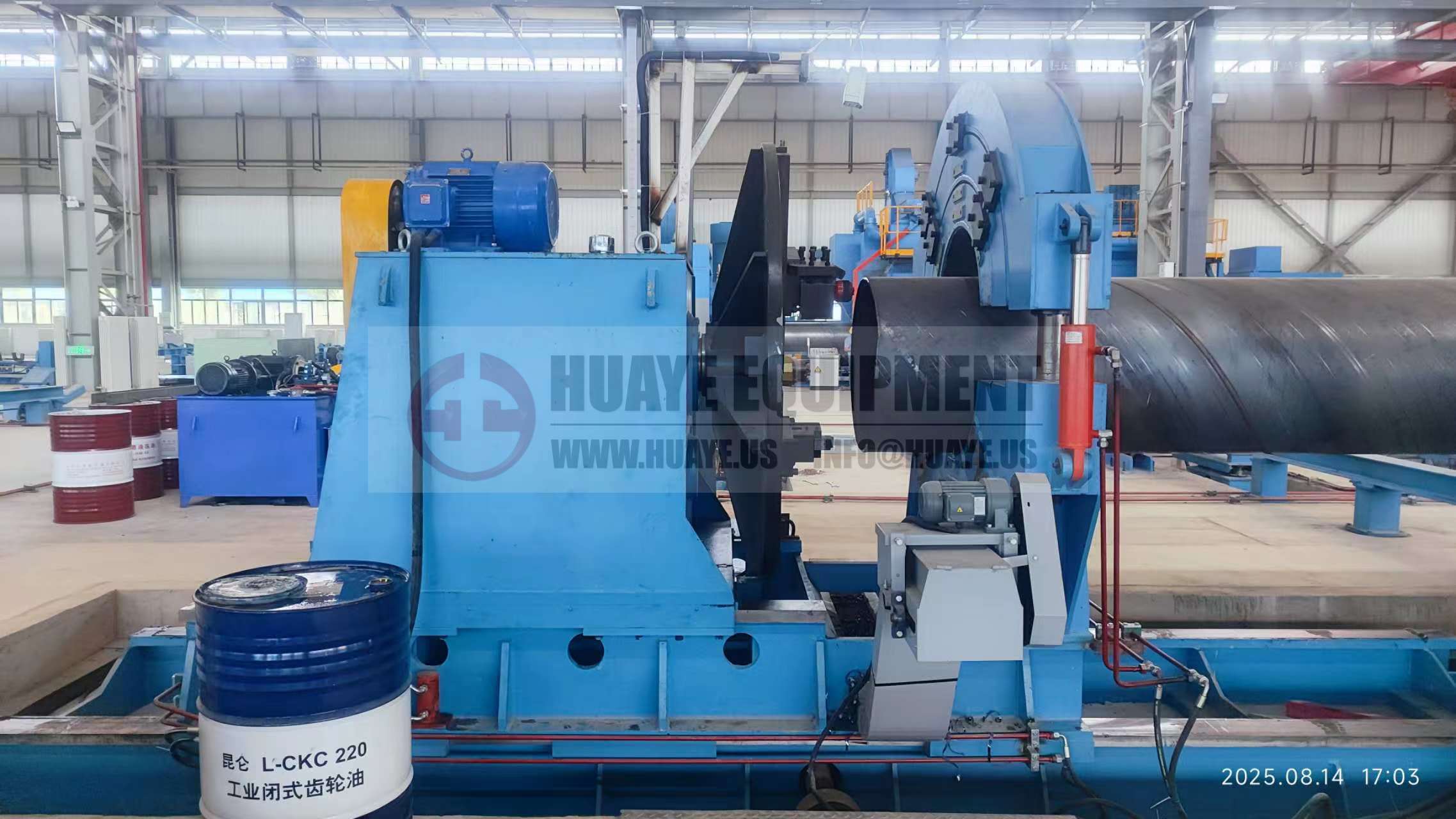
Welded pipe equipment typically requires transportation, installation, commissioning, and operator training before reaching a stable production phase. Consequently, the manufacturer's service capabilities are a crucial aspect of the procurement decision.
First, confirm whether the manufacturer provides comprehensive installation guidance, equipment commissioning, and operator training, and clearly define the responsibilities of both parties regarding on-site installation, technical support, and the acceptance process. For export projects, specific arrangements for technical documentation, remote support, and cross-regional service must be clarified in advance.
Second, understand the equipment's routine maintenance requirements, including inspections of critical components, lubrication schedules, replacement of wear parts, and troubleshooting procedures for common faults. The ability to obtain timely technical guidance in the event of issues with control systems or welding power sources directly impacts the efficiency of production line recovery.
Spare parts availability is equally important. Before purchasing, inquire about the list of common wear parts, part identification methods, and future supply arrangements to facilitate the establishment of a basic maintenance inventory.
Finally, it is recommended that technical specifications, acceptance criteria, training content, and the scope of after-sales service be clearly documented in the formal agreement. Clear delivery requirements help minimize communication discrepancies and ensure greater standardization in equipment procurement and subsequent management.
FAQs on Purchasing Pipe Welding Machines
Q1: What are the most important factors to consider when selecting a pipe welding machine manufacturer?
Focus primarily on the manufacturer's relevant project experience, equipment design and manufacturing capabilities, technical specifications, quality control processes, and after-sales support. Additionally, assess whether their proposed solution is truly suitable for the material, dimensions, and production requirements of the target steel pipes.
Q2: How can I verify the reliability of the equipment specifications provided by the manufacturer?
You can request detailed technical specifications, equipment acceptance criteria, and relevant test data, and verify processing capabilities through trial production runs using actual materials. For critical parameters, clarify the applicable operating conditions rather than relying solely on maximum speeds or theoretical production capacities.
Q3: Should I prioritize pipe welding equipment with a high level of automation?
Not necessarily. Automation configurations must align with production scale, product specifications, workforce skills, and maintenance capabilities. Equipment that fits the enterprise's actual production workflow is generally more valuable than a solution that is complex but suffers from low utilization rates.
Q4: Is it necessary to visit the manufacturer's factory before purchasing?
A site visit is recommended if circumstances permit. Observing the machining equipment, assembly workshops, inspection processes, and trial runs provides a more intuitive understanding of the manufacturer's production organization and quality management standards.
Q5: How can operational risks be minimized after equipment delivery?
Before purchasing, clearly define technical specifications, acceptance criteria, and the scope of services. During delivery, ensure proper installation, commissioning, operator training, and trial production verification. Once full-scale production begins, establish systems for equipment inspections, routine maintenance, and fault logging.
Key words:
All
- All
- Product Management
- News
- Introduction
- Enterprise outlets
- FAQ
- Enterprise Video
- Enterprise Atlas
Related News

What Are the Key Criteria for Choosing a 1420mm Spiral Pipe Mill Manufacturer?
Learn how to choose a 1420mm Spiral Pipe Mill manufacturer by evaluating equipment quality, technical expertise, production capacity, and after-sales support.
2026-11-11

Discover how an Industrial Steel Pipe Mill improves dimensional accuracy, welding quality, automation, and production efficiency through precise process control.
2026-11-11
Automation Development Trends and Application Value of Heavy Duty Steel Pipe Manufacturing Equipment
Explore the automation trends and applications of heavy duty steel pipe manufacturing equipment, from welding and pipe-end processing to intelligent production control.
2026-11-10


Service E-mail
Hotline:
Address
Taiyuan City, Shanxi Province
To inquire about our products, please leave your email to us and we will contact you within 24 hours.