





What Configurations Should You Focus on When Choosing a Spiral Welded Pipe Making Machine?
21 Oct,2026
Huaye
Explore key configurations of a Spiral Welded Pipe Making Machine, including forming systems, welding technology, automation, and quality control for efficient production.
For spiral welded pipe manufacturers, choosing the right Spiral Welded Pipe Making Machine affects not only pipe forming quality and welding performance but also production efficiency, equipment stability, and subsequent maintenance requirements. Different manufacturers have different needs in terms of pipe diameter, wall thickness, raw material specifications, and product applications. Therefore, equipment selection should not be based on a single parameter. Instead, manufacturers should evaluate the forming system, welding system, automation and control system, and complete production line configuration to ensure that the equipment meets their actual production requirements.
Forming System and Steel Strip Compatibility
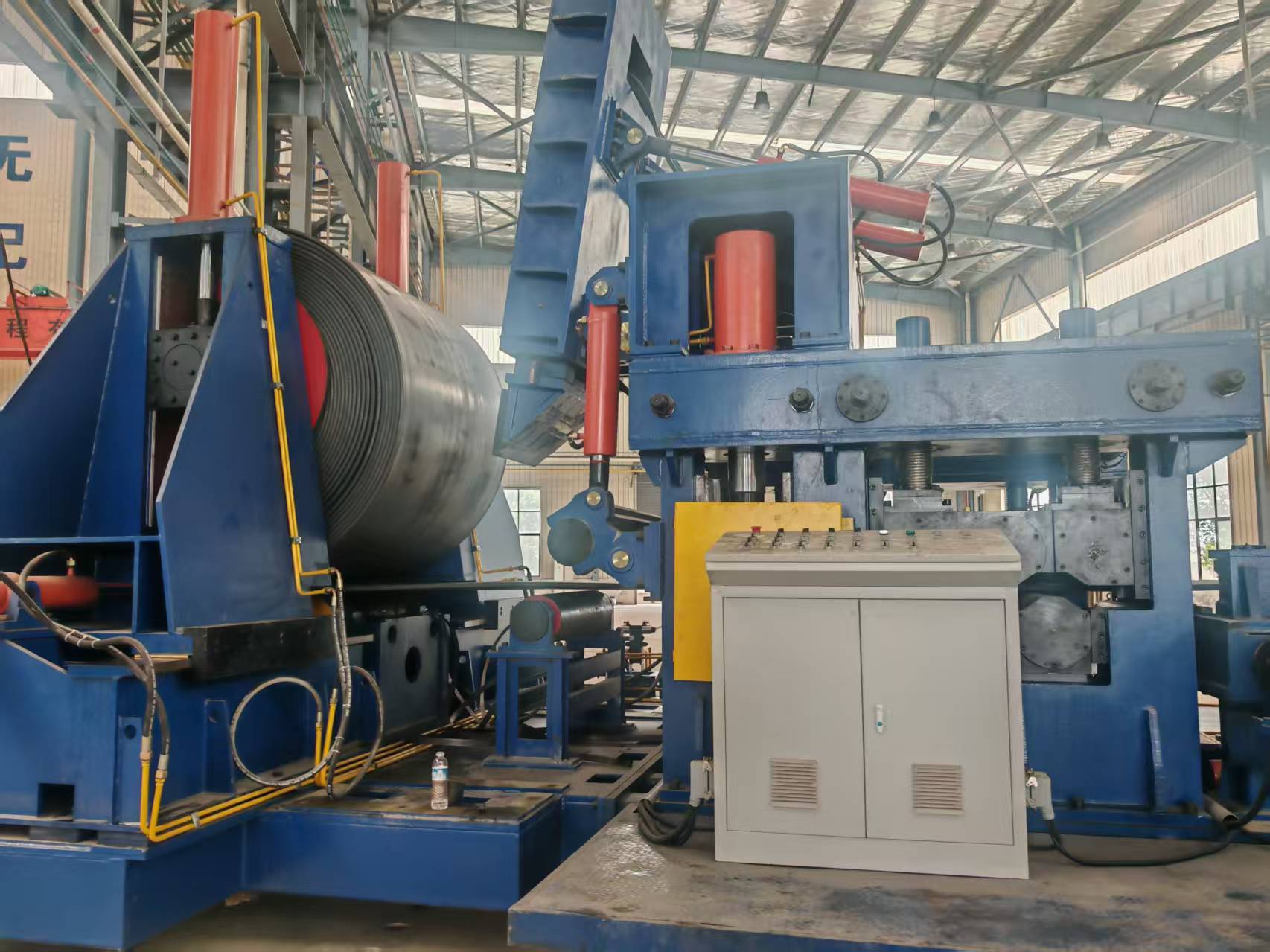
The forming system is a core component of a Spiral Welded Pipe Making Machine. It gradually bends continuous steel strip into a spiral pipe. Its structural design and adjustment capabilities directly affect pipe diameter, roundness, and production stability.
When selecting equipment, manufacturers should confirm the range of steel strip widths, thicknesses, and material strengths that the forming system can handle. Different pipe specifications require corresponding strip parameters. If the equipment cannot accommodate the raw material specifications required for production, it may increase adjustment difficulties and affect product quality.
Manufacturers should also evaluate the forming angle adjustment mechanism, roll configuration, and steel strip guiding system. For businesses that produce pipes in multiple diameters, the machine should provide suitable specification changeover capabilities, allowing operators to adjust production parameters according to different orders. Stable strip feeding and accurate edge positioning also help reduce forming deviations and provide favorable conditions for subsequent welding.
Therefore, when selecting the forming system of a Spiral Welded Pipe Making Machine, manufacturers should consider the target pipe diameter range, required wall thickness, and raw material specifications rather than relying solely on the machine name or a single specification.

Welding System and Quality Control Configuration
The welding system directly affects weld quality and the structural reliability of spiral steel pipes, making it one of the most important aspects to evaluate when choosing a Spiral Welded Pipe Making Machine. Manufacturers should determine the appropriate welding method and its operating range based on the steel grade, pipe wall thickness, applicable production standards, and intended applications.
For spiral welded pipe production lines using the submerged arc welding process, important configurations include welding power sources, welding heads, flux feeding and recovery systems, and welding parameter adjustment capabilities. A properly configured welding system helps maintain consistent welding conditions and reduce the risk of defects such as porosity, lack of fusion, and irregular weld formation.
However, welding quality depends on more than the welding equipment itself. Inspection and quality control systems should also be considered. Depending on applicable product standards and customer requirements, manufacturers may need to configure weld nondestructive testing equipment, dimensional inspection tools, and quality record management systems. Monitoring welding processes and inspection results allows manufacturers to identify abnormalities promptly and take corrective action.
During procurement, manufacturers should confirm whether the welding system can accommodate the intended pipe specifications and identify which parameters need adjustment when changing products. Proper coordination between the welding and forming systems is essential for maintaining consistent production quality.

Automation and Control Systems and Complete Production Line Configuration
The automation and control system affects operating convenience, parameter management, and the continuous production performance of a Spiral Welded Pipe Making Machine. The appropriate control method and automation level should be selected according to production volume and actual operational requirements.
First, manufacturers should evaluate the main control system's ability to coordinate steel strip feeding, forming, welding, and auxiliary equipment. Effective coordination between these processes helps reduce speed mismatches and operating errors.
Second, it is important to determine whether the system supports key parameter settings, operating status displays, fault alarms, and production data recording. These functions help operators monitor equipment conditions, shorten troubleshooting time, and provide useful information for subsequent process optimization. For manufacturers handling multiple pipe specifications, the ability to save and recall production parameters can also be valuable.
In addition to the main machine, manufacturers should consider the auxiliary equipment required for the complete production line. This may include an uncoiler, leveling equipment, steel strip end welding equipment, a pipe cutting system, conveying equipment, and necessary inspection devices. The capacities of these components should be properly matched to prevent a bottleneck in one process from affecting overall production efficiency.
Manufacturers should also confirm installation requirements, power supply specifications, operator training, and technical support arrangements. These considerations help ensure that the Spiral Welded Pipe Making Machine can be commissioned smoothly and operate reliably over the long term.
Frequently Asked Questions About Spiral Welded Pipe Making Machine Configurations
Q1: Which configuration is the most important when choosing a Spiral Welded Pipe Making Machine?
The forming system, welding system, and automation and control system are all important. The forming system determines the basic geometry of the pipe, the welding system affects weld quality, and the control system coordinates the production process. The appropriate configuration should be determined according to the target pipe specifications and quality requirements.
Q2: Which equipment configurations should be considered when producing pipes with different diameters?
Manufacturers should focus on forming angle adjustment capabilities, roll configurations, the applicable steel strip width range, and the methods used to adjust production parameters. They should also confirm whether the machine can maintain consistent forming quality after switching between different pipe specifications.
Q3: Is a higher level of automation always better for a manufacturer?
Not necessarily. The level of automation should match the production scale, product variety, and operators' capabilities. A suitable automation system can improve operating efficiency and parameter management, but manufacturers must also consider maintenance capabilities, training requirements, and actual production conditions.
Q4: Should the auxiliary equipment for the complete production line be confirmed before purchasing?
Yes. The performance of a Spiral Welded Pipe Making Machine depends not only on the main machine but also on steel strip preparation, feeding, cutting, and inspection processes. Before purchasing, manufacturers should verify the processing capacity, interface requirements, and control coordination of the complete production line to avoid compatibility issues.
Key words:
All
- All
- Product Management
- News
- Introduction
- Enterprise outlets
- FAQ
- Enterprise Video
- Enterprise Atlas
Related News
What Configurations Should You Focus on When Choosing a Spiral Welded Pipe Making Machine?
Explore key configurations of a Spiral Welded Pipe Making Machine, including forming systems, welding technology, automation, and quality control for efficient production.
2026-10-21

What Are the Strip Width and Thickness Requirements for a 2540mm spiral pipe machine?
Learn how a 2540mm spiral pipe machine handles strip width and thickness requirements to ensure accurate forming, reliable welding, and stable production.
2026-10-21

This analysis explores the key technologies that enable automatic steel pipe welding machines to accommodate steel pipes of varying wall thicknesses. It covers welding parameters, equipment configuration, process optimization, and quality control—helping enterprises enhance both welding efficiency and product quality.
2026-10-20


Service E-mail
Hotline:
Address
Taiyuan City, Shanxi Province
To inquire about our products, please leave your email to us and we will contact you within 24 hours.