





How to Choose a Spiral Tube Making Machine? A Comprehensive Guide from Production Process to Equipment Configuration
30 Sep,2026
Huaye
Gain an understanding of the working principles, equipment structure, production process, selection criteria, and maintenance methods of spiral tube making machines to help pipe manufacturing enterprises improve production efficiency and forming quality.
In sectors such as water conveyance, oil and gas transport, pile foundation engineering, and structural construction, spiral pipes must possess excellent strength, dimensional stability, and suitability for continuous production. For manufacturers, the spiral tube making machine is a critical piece of equipment for producing spiral-welded steel pipes.
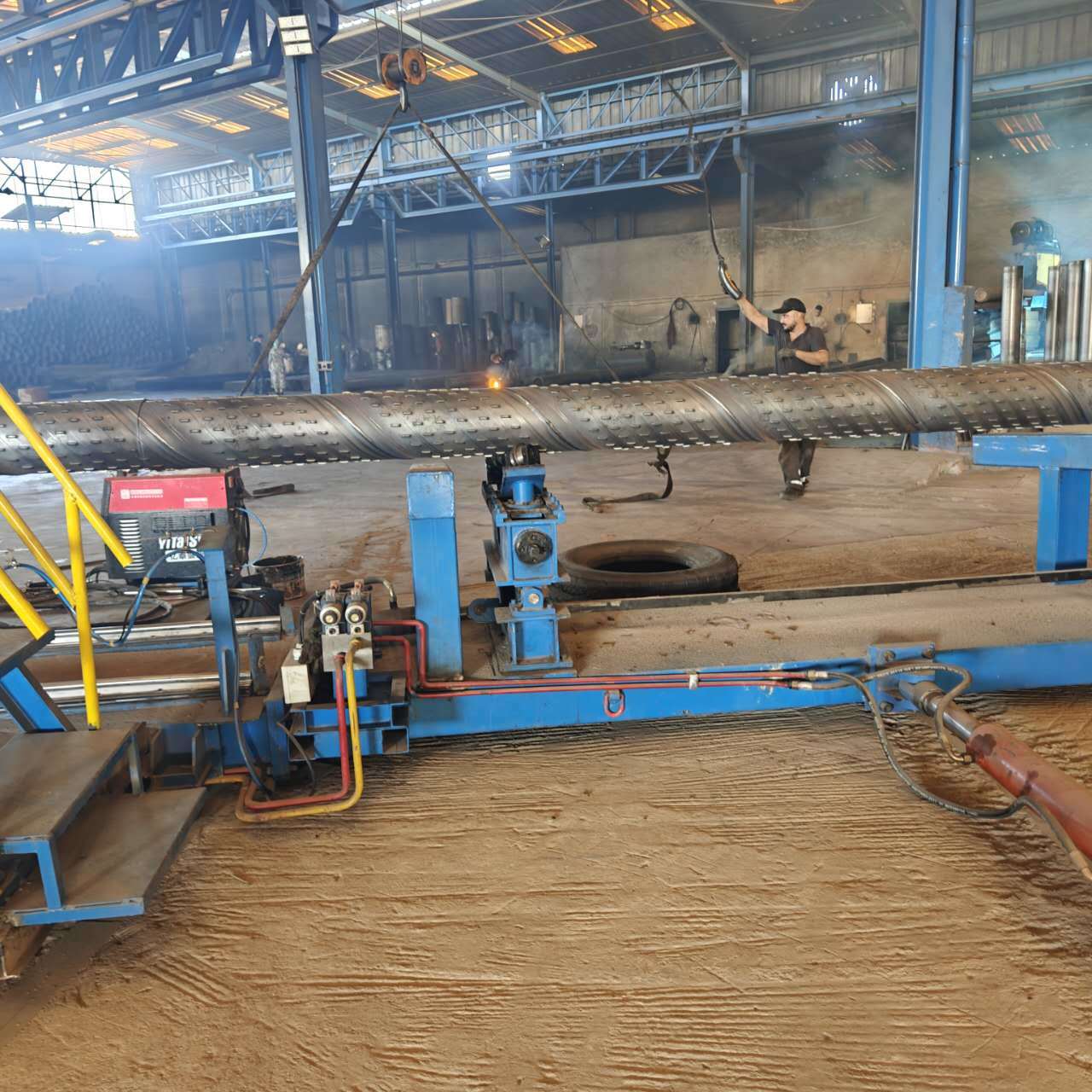
Utilizing continuous forming and welding processes, the machine progressively transforms steel strips into spiral steel pipes of various specifications, suitable for applications ranging from water and oil/gas pipelines to piling and structural piping. For enterprises planning to purchase or upgrade steel pipe production lines, understanding the equipment's operating principles, core structure, and key selection criteria facilitates the development of a more effective production strategy.

What is a Spiral Tube Making Machine?
A spiral tube making machine is specialized equipment used for the continuous production of spiral-welded steel pipes. During the production process, steel strip undergoes uncoiling, leveling, feeding, forming, welding, and cutting to gradually form a steel pipe with a spiral weld seam structure.
Unlike the production method for straight-seam steel pipes, the spiral forming process allows for the production of pipes with varying diameters and lengths by adjusting parameters such as strip width and forming angle, thereby offering great flexibility regarding specifications.
Depending on equipment configuration and production requirements, spiral tube making machines can be utilized in a wide range of applications, including water transport projects, oil and gas transmission, pile pipe manufacturing, and structural pipe production.
For steel pipe manufacturers, the equipment must not only meet basic forming requirements but also deliver strong performance in terms of welding stability, production efficiency, dimensional control, and continuous operational capability.
How Does a Spiral Tube Making Machine Produce Ducts?
A complete production process typically involves raw material loading, feeding, spiral forming, seam locking, and cut-to-length operations.
First, the coiled metal strip is loaded into the feeding mechanism. The feeding system continuously conveys the material at a preset speed while maintaining relatively stable tension.
Next, the metal strip enters the forming zone. Through the coordinated action of multiple forming components, the flat metal strip is gradually bent into an arc shape and continuously spiraled at a specific angle. Once the edges of the metal strip make contact, the equipment joins them using a lock-seam or interlocking structure, maintaining the pipe's continuous spiral form.
Finally, the formed pipe is cut to the required length. Some automated systems can also integrate with downstream equipment—such as conveyors and collection units—to minimize manual labor.
Throughout the process, the feeding speed, forming parameters, and cutting length must be precisely coordinated. Improper parameter settings can lead to variations in pipe diameter, irregular spiral angles, or inconsistent lock-seam quality.

What are the main components of the equipment?
While the structure of spiral tube making machines varies by model, typical equipment generally comprises the following components:
1. Feeding System
The feeding system continuously delivers the coiled material to the forming area. A stable feed rate helps ensure the continuity of the pipe production process.
2. Forming System
This is the core of the machine; using components such as forming rollers and guides, it gradually shapes the flat metal strip into a circular cross-section with a spiral structure.
3. Lock-Seam System
The lock-seam mechanism joins the edges of the metal strip. The uniformity of the seam affects the pipe's overall structural strength and sealing performance.
4. Drive System
Motors and transmission mechanisms provide the power to operate the machine. Stable power output minimizes speed fluctuations during production.
5. Control System
Modern machines typically utilize electrical control systems to adjust production speed, pipe diameter, and other operating parameters. Digital controls also allow operators to quickly switch settings for different specifications.
6. Cutting System
Once the pipe reaches the preset length, the cutting mechanism performs a precision cut, ensuring the product meets requirements for subsequent transport and installation.
Why is continuous production becoming increasingly important?
For enterprises requiring large-scale production of spiral pipes, production efficiency and dimensional consistency are often key factors when selecting equipment.
Traditional manufacturing methods require significant manual intervention, whereas highly automated spiral tube making machines reduce repetitive tasks and create a more continuous flow from material feeding to forming.
Another distinct advantage of continuous production is the reduction of processing variations between different product batches. Once equipment parameters stabilize, products of the same specification can be manufactured according to relatively consistent standards.
Furthermore, spiral ducts often come with diverse requirements regarding diameter and length. If the equipment offers strong adjustability, enterprises can rapidly switch production parameters based on order requirements, thereby enhancing equipment utilization rates.
Therefore, when purchasing equipment, enterprises should not focus solely on theoretical production speeds; they must also comprehensively consider actual processing capabilities, changeover efficiency, control precision, and long-term operational stability.
What are the key factors when purchasing a spiral tube making machine?
When evaluating equipment from various suppliers, enterprises should base their decisions on actual production needs.
First, consider the processing range. Confirm that the machine's capabilities—such as the range of tube diameters, material types, and applicable material thicknesses—align with your order requirements. If there is a possibility of expanding product specifications in the future, consider the equipment's scalability as well.
Second, look at forming quality. Factors such as the roundness of the spiral tube, the quality of the lock seam, and the surface finish all impact the final product quality. Before purchasing, you can request actual samples or arrange for a machine trial run.
Next, consider the level of automation. For enterprises with high order volumes, features such as automatic feeding, automatic cutting, and parameter control are important. However, a higher level of automation is not necessarily suitable for every enterprise; the key is to match the automation level to the actual production scale.
Also, pay attention to the adjustment method. The ease of switching between different product specifications directly affects production setup time. This is particularly important for enterprises that handle a large number of orders involving multiple specifications and small batch sizes.
Finally, understand the requirements for daily maintenance, the availability of wear parts, and the level of technical support provided. For production equipment intended for long-term, continuous operation, after-sales service is a crucial component of the purchasing decision.

How should daily maintenance be handled?
After prolonged operation, components such as the feeding mechanism, forming parts, drive system, and lock-seam mechanism of a spiral tube making machine will inevitably experience some degree of wear; therefore, a regular maintenance schedule must be established.
Before production begins, check that all connecting parts are secure, ensure the feeding path is free of foreign objects, and verify that major moving parts are functioning correctly.
During operation, monitor the machine for issues such as abnormal noise, excessive vibration, or unstable feeding. If a change in pipe diameter is detected, the forming and feeding systems should also be inspected promptly.
Moving parts requiring lubrication should be maintained according to the equipment manual. Insufficient lubrication can increase friction, while improper lubrication methods may disrupt normal equipment operation.
Additionally, when restarting the equipment after a prolonged shutdown, perform a preliminary inspection; proceeding directly to high-speed continuous production is not recommended.
Regular maintenance not only reduces the likelihood of unexpected breakdowns but also helps preserve long-term machining precision, thereby minimizing product quality issues caused by changes in equipment condition.
Q&A: Common Questions About Spiral Tube Making Machines
Q1: What does the Spiral Tube Making Machine primarily produce?
It is primarily used to manufacture spiral-welded steel pipes. Depending on the equipment configuration, it can be applied to the production of water transmission pipes, oil and gas pipelines, piling pipes, and structural pipes.
Q2: What materials can the equipment process?
This depends on the specific equipment model and configuration. Common materials include metal strips such as galvanized steel and stainless steel. Before purchasing, confirm the equipment's capabilities with the supplier based on the specific material type and thickness you intend to use.
Q3: How do I determine if the equipment is suitable for my factory?
You should make a comprehensive assessment based on factors such as product specifications, material thickness, production volume, automation requirements, and potential changes in future orders. Do not base your choice solely on the equipment's maximum specifications or theoretical speed.
Q4: Does a spiral tube making machine require frequent maintenance?
The equipment requires daily inspections and regular maintenance, particularly for critical components such as the feeding, forming, transmission, and seam-locking systems. Adhering to the maintenance requirements helps ensure stable production performance.
Q5: Should I conduct a test run before purchasing the equipment?
If conditions permit, a test run is highly recommended. A test run allows you to directly observe the forming results, seam-locking quality, operational stability, and the adjustment process between different specifications, making it easier to determine if the equipment meets your actual production needs.
Key words:
All
- All
- Product Management
- News
- Introduction
- Enterprise outlets
- FAQ
- Enterprise Video
- Enterprise Atlas
Related News

What Are the Key Criteria for Choosing a 1420mm Spiral Pipe Mill Manufacturer?
Learn how to choose a 1420mm Spiral Pipe Mill manufacturer by evaluating equipment quality, technical expertise, production capacity, and after-sales support.
2026-11-11

Discover how an Industrial Steel Pipe Mill improves dimensional accuracy, welding quality, automation, and production efficiency through precise process control.
2026-11-11
Automation Development Trends and Application Value of Heavy Duty Steel Pipe Manufacturing Equipment
Explore the automation trends and applications of heavy duty steel pipe manufacturing equipment, from welding and pipe-end processing to intelligent production control.
2026-11-10


Service E-mail
Hotline:
Address
Taiyuan City, Shanxi Province
To inquire about our products, please leave your email to us and we will contact you within 24 hours.